























(KAMPALA, UGANDA) – South Sudanese traders are seeking direct access to Ugandan manufacturers and an end to repeated cargo inspections, as both countries signed a trade agreement to remove barriers that increase costs and limit smaller traders.
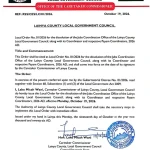
The memorandum of understanding was signed on 14th October 2026 at the second Uganda and South Sudan Business Forum and Exhibition in Kampala by Uganda’s Minister of State for Industry, David Bahati, and South Sudan’s Minister of Trade and Industry, Labanya Margaret Mathya.
A joint technical committee will oversee implementation of agreed activities, while a clear roadmap will address specific border bottlenecks with timelines and measurable outcomes.
The urgency of the agreement is reflected in the imbalance in bilateral trade. Mr Bahati said Uganda exported goods worth about $524 million to South Sudan, while South Sudan’s exports to Uganda stood at approximately $22 million.
South Sudanese traders have raised concerns over intermediaries allegedly dominating access to Ugandan suppliers. South Sudan’s Ambassador to Uganda, Paul Malong Akaro, said South Sudanese traders cannot buy goods directly from Ugandan manufacturers despite having the financial capacity.
“Our traders don’t have access to manufacturers to buy goods from Uganda,” Mr Akaro said, calling on Uganda’s Ministry of Trade to address the issue.
Ugandan goods, particularly construction materials, supply major markets in Juba, creating business opportunities for local manufacturers and traders.
Exporters moving goods through Uganda face standards and clearance challenges despite improvements in digital border processing. Mr Bahati identified delays associated with South Sudan’s electronic permit system, repeated cargo inspections, multiple checkpoints, unofficial charges and inconsistent clearance procedures along the Kampala to Gulu to Nimule to Juba corridor as major obstacles.
Uganda’s Ambassador to South Sudan, Brigadier General Ronnie Balya, said joint technical committees would oversee implementation of the agreement through a roadmap containing timelines, measurable targets and regular review meetings.
“We should judge the success of the MoU not by the signing ceremony alone,” Mr Bahati said, stressing that its value should be measured by tangible economic outcomes.
Discover more from Access Radio®
Subscribe to get the latest posts sent to your email.