



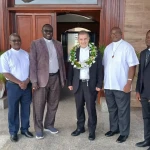






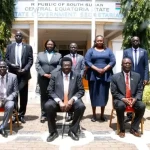

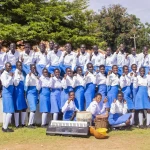

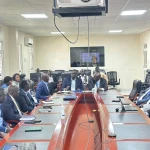



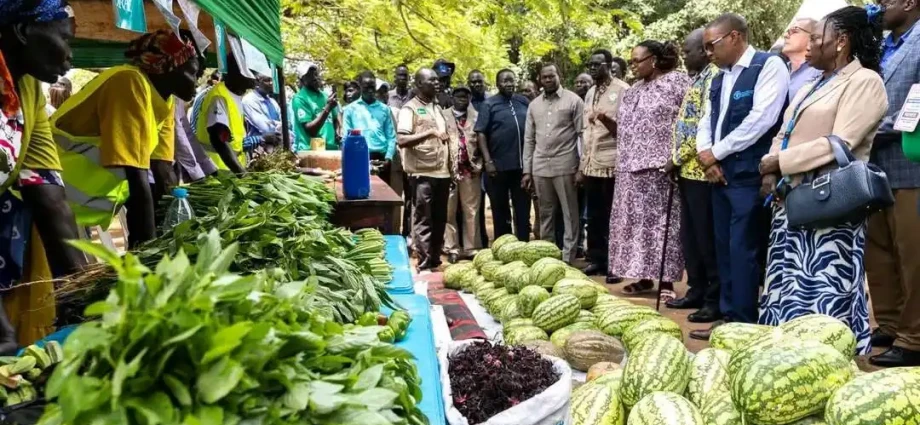
(TEREKEKA / YAMBIO) – The Food and Agriculture Organization of the United Nations in South Sudan joined farmers, government representatives, development partners and local communities in Terekeka to mark World Food Day 2026.
The celebration was held under the theme “Innovate today. Nourish tomorrow.”
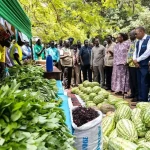
As part of the event, FAO showcased exhibitions on crops, livestock and fisheries to show their contributions to food security, nutrition and livelihoods across South Sudan.
The exhibitions provided a platform to demonstrate the diversity of South Sudan’s agri-food systems. They also stressed the importance of supporting farmers, embracing innovation and strengthening agricultural production to meet the country’s food needs.
FAO reaffirmed its commitment to working with the Government of South Sudan, farmers and development partners. It said the aim was to transform agri-food systems and promote a more food secure future for all.
According to FACO, the celebration highlighted the role of agricultural innovation and investment in strengthening food production, improving livelihoods and addressing food insecurity across the country.
World Food Day marks the founding of the FAO in 1945. It was designated in 1979 and first observed in 1981.
The scale of the challenge in South Sudan remains severe. The FAO and the World Food Programme reported in April 2026 that 7.8 million people in South Sudan faced high levels of acute food insecurity between April and July 2026.
That figure represents about 56% of the population. Four counties were projected to face a risk of famine.
South Sudan relies heavily on agriculture for rural livelihoods. However, food production and access to food are affected by conflict, displacement, erratic rainfall, prolonged dry spells, flooding, limited access to agricultural inputs and weak market links.
In a related development, German development agency GIZ said it is supporting 34,500 households in South Sudan to improve food security and rural livelihoods.
GIZ made the statement during a separate World Food Day event in Yambio, Western Equatoria State, on 16th October 2026.
The Yambio event was organised by the state government, non governmental organisations and development partners.
Farmers supported by GIZ projects exhibited and sold fruit tree seedlings at the event. They also shared knowledge on planting techniques and tree care.
The event featured discussions and exhibitions of locally produced crops and agricultural innovations.
GIZ said its work in the country focuses on improving agricultural production, nutrition, income generating opportunities and the sustainable management of natural resources. The aim is to help communities withstand economic and climate related shocks.
The agency implements its Food and Nutrition Security and Management of Natural Resources project, known as FONA. The project is funded by Germany’s Federal Ministry for Economic Cooperation and Development.
GIZ also implements its Community Driven Rural Development project, funded by the ministry, the Netherlands and the European Union.
The projects work with smallholder farmers, communities, local institutions, non governmental organisations and development partners. They address challenges related to food production, nutrition, natural resources and rural livelihoods.
GIZ said the projects directly benefited 34,500 households, reaching up to 310,500 people in South Sudan.
The agency called on government institutions, development partners, humanitarian organisations, civil society and the private sector to increase investment in agriculture, local food systems, rural infrastructure and community resilience.
GIZ is a German federal enterprise that supports international cooperation for sustainable development. In South Sudan, it works on agricultural development, food and nutrition security, rural livelihoods, natural resource management, water access and community resilience on behalf of the German government.
GIZ’s work in Western Equatoria extends beyond the projects highlighted at the World Food Day event.
In late 2024, GIZ and Cordaid launched drilling and rehabilitation of boreholes in Yambio and Nzara counties. The partners said 18 boreholes would provide clean water access, with 7 newly drilled and 11 non functional boreholes rehabilitated, according to Africa Press.
Three rehabilitated boreholes were upgraded with solar powered technology. A GIZ assessment in 2023 found that many communities in the two counties depended on run off surface water from streams and rivers and often lacked access to clean water, sanitation and hygiene services.
Earlier work under the FONA project also drilled another 7 boreholes and rehabilitated 11 additional boreholes in Western Equatoria to improve livelihoods, food and nutrition security, health and resilience, Africa Press reported.
In April 2026, GIZ distributed 750 female goats to vulnerable households in Yambio and Nzara counties under the FONA project. The distribution included host communities and returnees, according to a statement reported by the Université de Tours news digest.
GIZ said small livestock, particularly goats, provide a reliable source of protein through meat and milk. They also contribute to household income and support sustainable farming through manure production.
The intervention included training on improved livestock husbandry practices covering animal health, feeding and management.
Under the FONA and Fostering Integrated Disaster Risk Management projects, communities in Yambio and Magwi received training in nursery management, sustainable land use and bushfire prevention, according to a joint statement from partners reported by Africa Press in March 2026.
Partners distributed more than 18,000 tree seedlings, including fruit trees, shade trees and native species, across both locations. Community managed nurseries were established, and thousands of smallholder farmers received training in agroforestry and sustainable land management.
GIZ South Sudan said in a LinkedIn post in April 2026 that the FONA and FIDRM projects were helping communities in Yambio and Magwi restore degraded landscapes while integrating trees into farming systems to boost productivity and resilience.
The FONA project is funded by Germany’s Federal Ministry for Economic Cooperation and Development. The Community Driven Rural Development project is funded by the ministry, the Netherlands and the European Union. GIZ implements both projects on behalf of the German government.
The CDRD project runs from April 2022 to March 2029. With its EU extension from 2024, it supports a total of 27,500 smallholder households across Western Equatoria, Central Equatoria, Eastern Equatoria, Northern Bahr el Ghazal and Western Bahr el Ghazal, according to a European Union tender notice from 2026.
Discover more from Access Radio®
Subscribe to get the latest posts sent to your email.