
















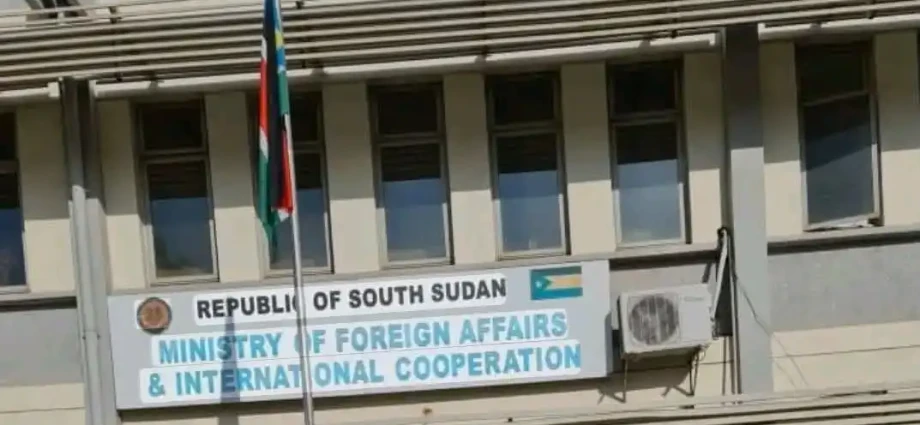
(NAIROBI) – South Sudan has urged its citizens living in Kenya to regularise their stay by ensuring they have valid passports, visas and other required documents.
South Sudan’s Ambassador to Kenya, Simon Juach Den, spoke to the media on 7th October.
He advised nationals staying in Kenya for more than 90 days to apply for extensions to avoid being considered illegal immigrants.
“If you stay more than 90 days, you are required to extend your stay. Because if you don’t extend your visa stay, you will be staying illegally in Kenya and you would have issues with the police and the other law enforcement agencies like the immigration,” Den said.
He warned that failure to extend their visas could expose South Sudanese to challenges with Kenyan police and immigration authorities.
The Ambassador said the South Sudanese government is actively engaging with Kenyan authorities to establish streamlined procedures for extending stays.
He said the measures would particularly help mothers and guardians accompanying students in Kenya.
“We are working closely with the Kenyan authorities to find ways for people to easily extend their stay, especially their mothers or guardians, I would say, who are here with the students,” he added.
He said the measures are part of efforts to strengthen relations between South Sudan and Kenya while ensuring South Sudanese citizens comply with Kenyan immigration requirements.
Data from the Office of the United Nations High Commissioner for Refugees shows that Kenya currently hosts over 213,000 South Sudanese nationals.
A large number of them are considered refugees and asylum seekers, accounting for over 94 per cent who reside in Kakuma and Kalobeyei settlements.
About 4.1 per cent are well integrated into Kenyan communities in metropolitan areas such as Nairobi and Nakuru.
The announcement comes after Burundian nationals in Kenya were caught off guard when President William Ruto announced a 90-day registration and documentation window for undocumented Burundian citizens and other East African Community nationals living in the country.
The move drew widespread condemnation.
South Sudan made a similar declaration, this time targeting foreigners operating small businesses in the world’s youngest nation.
The directive restricted nationals from Kenya, Uganda, Ethiopia, Eritrea and Burundi from running small-scale retail businesses.
Discover more from Access Radio®
Subscribe to get the latest posts sent to your email.