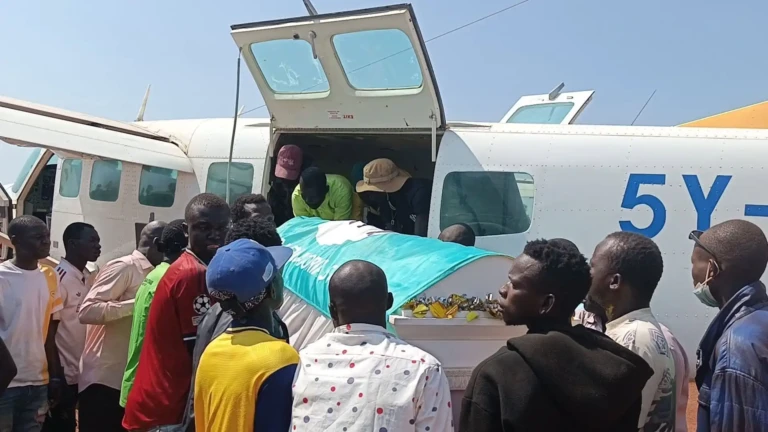
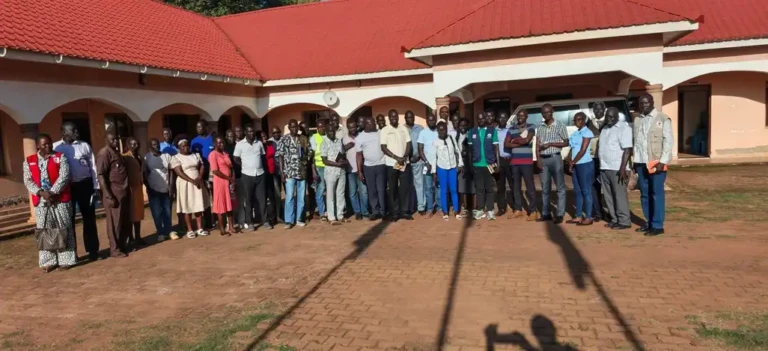
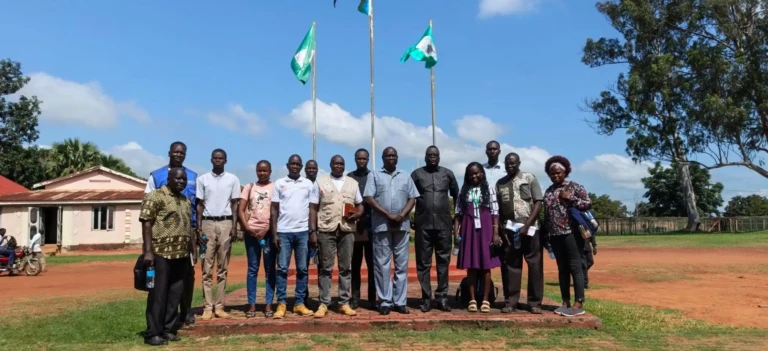
Residents in Tore Payam/Photo: Christopher Taharir
(YEI) – Snakebite incidents are on the rise in Tore Payam, Yei River County, Central Equatoria State, following the prolonged closure of the area’s only functional health facility. Local officials and residents have reported increasing cases, with at least three Ambororo pastoralists recently bitten by snakes. One of the victims, a 31 year old man identified as Mr. Essen, has died.
According to Mr. Abdullah Magi, Chairperson of the Business Union in Tore Payam, the deceased succumbed to his injuries despite efforts to save him using local herbal medicine. His condition deteriorated before he could be transported to the Tore Primary Health Care Centre (PHCC) for treatment.
The two surviving victims were taken to Dakundu-olo Primary Health Care Unit in Rasulo town, where they are reportedly recovering.
Abdullah said the main challenge in preventing fatalities from snakebites lies in poor infrastructure and the lack of essential medical supplies, particularly antivenom.
“The roads are bad, transport is limited and most people don’t understand how urgent it is to get medical help,” he explained. “On top of that, we don’t even have antivenom available here.”
Mr. Jackson Sebit, the Director of Tore Payam, confirmed the burial of the deceased at the Payam Centre. He appealed to the Yei County Health Department to urgently supply antivenom, noting the current critical shortage.
The situation has been made worse by the closure of the Tore PHCC in December 2024. Since then, residents say they have had no access to formal medical services. The closure came after the Health Pool Fund (HPF) handed over management of the facility to local authorities. The centre was previously supported by HPF and operated by the South Sudan Health Association (SSUHA), a local NGO.

Since HPF’s withdrawal, the clinic has remained closed and health staff have abandoned the premises. As a result, residents have been forced to rely on traditional remedies such as herbal roots and leaves to treat illnesses like malaria, typhoid, and now snakebites.
Community members say the continued closure of the PHCC has left them vulnerable, especially during emergencies like snakebite incidents. The absence of antivenom is particularly dangerous, as the window for successful treatment is short and facilities capable of administering proper care are far away.
A simple illustration of the impact of health service closure in Tore Payam:
| Health Issue | Before PHCC Closure | After PHCC Closure |
|---|---|---|
| Access to Antivenom | Available (limited stock) | Unavailable |
| Treatment Response | Within 1–2 hours | Over 6 hours (if at all) |
| Fatalities Reported | Rare | At least 1 confirmed death |
| Medical Transport | Occasionally available | Mostly unavailable |
| Use of Herbal Medicine | Low | High |
Discover more from Access Radio Yei News
Subscribe to get the latest posts sent to your email.