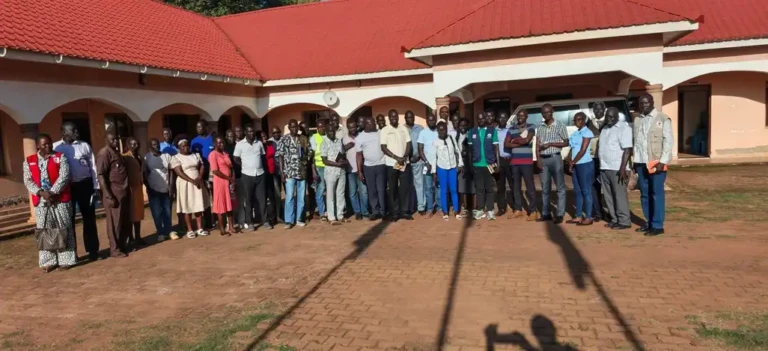
Traditional Drying Methods No Longer Enough in Yei/Photo: Peter Jamba
(Yei) – Farmers in Yei River County are urging the government, NGOs and agriculture based companies to support them with modern post harvest technologies to reduce crop losses and improve income. The appeal comes after increasing concerns over the spoilage of perishable vegetables due to poor preservation methods, especially during the rainy season.
Currently, most farmers in the area rely on traditional sun drying to preserve their excess produce. However, this method is proving ineffective under current weather conditions, leading to significant post harvest losses.
Peter Jamba, a youth farmer based in Yei, told Access Radio that despite harvesting large quantities of vegetables like okra, eggplant, and cabbage, he cannot preserve the surplus.
“There is too much rain in Yei at the moment, and I am finding it difficult to preserve the excess produce I bring back from the market. Some of it is already rotting because we have no modern technology to dry it,” he said.

Jamba called on the national and state governments, along with development partners and agribusiness companies, to invest in technology that can help farmers add value to their produce. He believes that doing so would help farmers process surplus produce into marketable goods for later use when demand increases.
“The markets in Yei are already flooded with organic local produce. This oversupply forces farmers to incur major financial losses,” Jamba added. “We need value chain support, so that in times of excess, the produce can be preserved, processed, and sold when needed.”
He also encouraged fellow farmers to be more innovative and think creatively about preservation and marketing, despite the challenges they face.
Another farmer, Matatias Robert from Goja village, voiced similar concerns. He noted that the county has experienced a successful harvest in the first crop season, especially with vegetables and greens, but that preservation remains a serious issue.
“Without better storage options, all our hard work is going to waste,” he said.
Amira Josephine, an agribusiness farmer, expressed worry over the high surplus of vegetables in the market and the resulting low demand.
“We have enough vegetables in Yei town — tomatoes, eggplants, and carrots but the low market demand means a lot is going bad before it can be sold,” she said.

Lasuba Gabriel, a project officer with the Organic Farm Advisory Organisation (OFAO), a national NGO based in Yei, acknowledged the farmers’ concerns. He explained that vegetable preservation requires a cold chain system, which is not available in the area due to the lack of electricity.
“Farmers need to make the best use of local means for now. However, we will continue with civic education and capacity building on post-harvest management,” he said.
Isaac Asiki, the County Director of Agriculture for Yei, also admitted that the issue is a growing concern.
“Farmers in Yei lack access to proper technology to preserve vegetables. While NGOs and agri-companies are active in the area, they mainly focus on improving productivity. Little or no support is given for post harvest handling and storage technology,” he said.
Asiki stressed that the absence of value addition opportunities discourages farmers from increasing production.
“Vegetables need to be sold immediately after harvest because they spoil quickly. The losses farmers suffer each season are limiting their willingness to grow large quantities,” he said.
He urged agriculture focused development partners, companies, and the government to direct more investment towards post harvest infrastructure and technology to enhance productivity and reduce food waste in Yei County.
Discover more from Access Radio Yei News
Subscribe to get the latest posts sent to your email.