Juba-Prison-Photo by Eye Radio
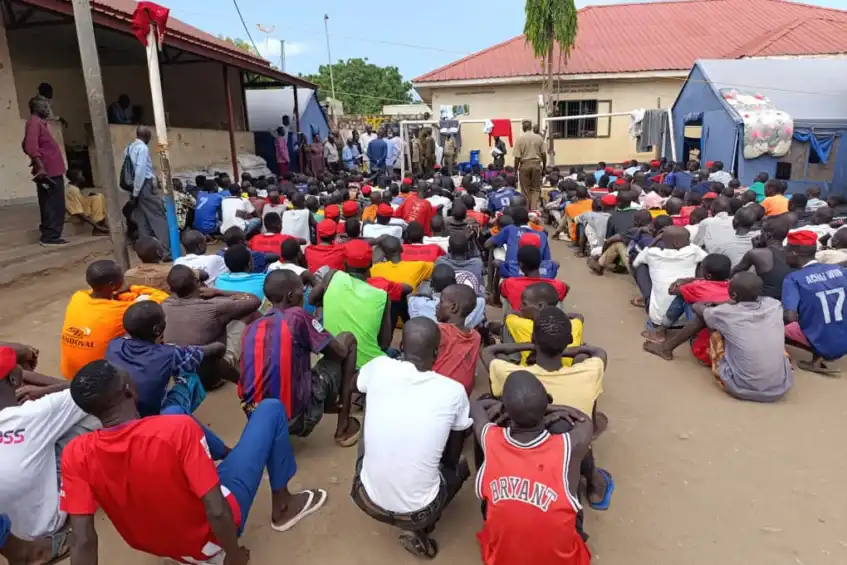
JUBA — Inside the crowded halls of Juba’s Juvenile Reformatory School, hundreds of children marked the Day of the African Child on Tuesday, listening to messages of hope, mental health and second chances.
For a few hours, the celebration offered a welcome break from the realities many of them face every day, overcrowded dormitories, food shortages and long waits for justice.
For many of the more than 300 boys being held at the facility, the event was a rare reminder that they have not been forgotten.
Civil society groups, youth activists and prison officials gathered at the detention center to commemorate the annual observance and draw attention to the rights and welfare of children in conflict with the law.
“We wanted them to know that they are seen, they are heard and they are important in society,” said Jennifer John Jada, secretary-general of Tribe 64, a youth organization that promotes unity among communities in South Sudan. “Just because they are here does not mean it is the end of everything. They can still build a future.”
The event was organized by the Young Women Christian Association (YWCA) and supported by youth volunteers who led discussions on mental health, drug abuse, gender-based violence and social reintegration.
For Nemisio Joy Bage, a project officer with the YWCA, the day was about reaching children who are often overlooked.
“These children are part of our community and society,” Bage said. “They should not be forgotten. We wanted to share some joy with them, encourage them and help them understand issues like mental health and drug abuse.”
Bage said many of the children in detention are struggling with trauma, peer pressure, gang influence and substance abuse. Through mentorship programs, the organization equips young people to support one another and speak openly about mental health challenges.
“It is important that young men talk to other young men about issues affecting them,” she said. “They are often in the best position to influence positive change.”
The celebration included psychosocial support sessions and the distribution of basic supplies, including sanitary pads for girls in detention facilities.
Organizers said they hope to continue engaging the children beyond the one-day event, arguing that recovery and rehabilitation require long-term support.
But behind the messages of encouragement lies a detention system struggling to meet the basic needs of the children in its care.
According to the director of the Juvenile Reformatory School, Akol Michael, the facility was designed to accommodate 100 children but is currently housing more than 314.
“We have serious challenges with overcrowding and malnutrition,” Akol said. “The institution was built for 100 children, but we now have more than three times that number.”
The overcrowding has strained already limited resources and made it harder to manage disease outbreaks and rehabilitation programs.
Food shortages remain another major concern. Akol said many of the children receive only one meal a day due to delays in government payments to food suppliers.
“One meal cannot help them,” he said.
The challenges extend beyond food and accommodation.
Of the 314 juveniles currently held at the facility, 233 are on remand awaiting trial, according to prison authorities. Some have spent three to four years in detention without their cases being heard in court.
“Some stay for years without seeing justice,” Akol said, attributing the delays to transportation shortages and logistical constraints within the judicial system.
Only 81 of the children at the facility have been convicted and sentenced.
The prolonged detention of children awaiting trial has complicated rehabilitation efforts. Akol said vocational training and other rehabilitation programs remain underfunded despite their importance in helping young offenders rebuild their lives and reintegrate into society.
“We need support for vocational training, food and transportation,” he said. “Without support, rehabilitation becomes very difficult.”
The facility currently relies heavily on support from the United Nations Development Programme, particularly through mobile court initiatives aimed at reducing case backlogs. Assistance from other humanitarian partners has declined in recent years, Akol added.
The Day of the African Child is observed annually on June 16 to commemorate the students killed during the 1976 Soweto uprising in South Africa while protesting against unequal education. Across the continent, the day serves as a reminder of the responsibility of governments and societies to protect the rights and welfare of children.
For the children gathered inside Juba’s juvenile detention center, those promises remain far from fully realized.
Discover more from Access Radio Yei News
Subscribe to get the latest posts sent to your email.