









(JUBA) – In South Sudan’s Parliament, something more pressing than policy is making rounds: empty pockets. Lawmakers whose job it is to debate national matters have now turned to debating their own unpaid salaries.
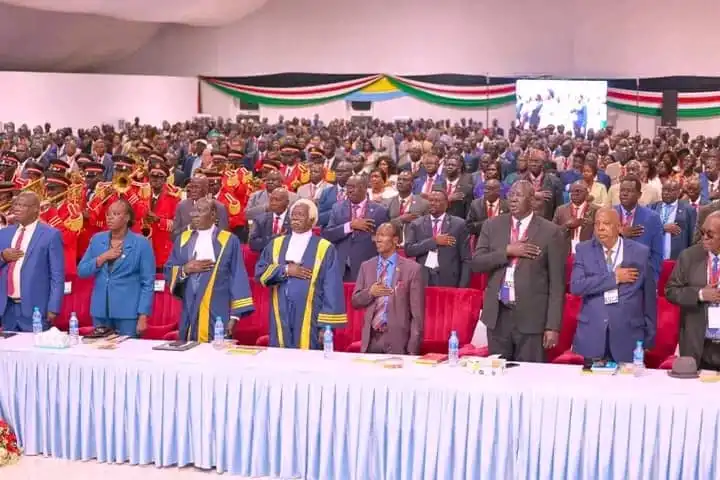
During a recent sitting of the Transitional National Legislative Assembly (TNLA), what began as a regular Monday turned into an open mic of economic frustration. Honourable Michael Ruot Koryom of Nyirol County stood up with a personal appeal that resonated across party lines:
“We can’t even access our salaries!”
He didn’t need a mic drop. The banks had already done that by dropping all liquidity.
It turns out, for the past month, South Sudanese working for the government, including soldiers, police, and yes, MPs have watched their salaries rot in digital ledgers, unwithdrawn, unspent and unusable. To put it in local perspective, even boda boda riders now have a better daily cash flow than many legislators.
While honourables are trying to get paid, the people who voted them in can’t afford bread. But not to worry, MPs have a plan. They will “summon” Finance Minister Dr. Marial Dongrin Ater and the Central Bank top brass.
MP Anei John Akok from Northern Bahr el Ghazal gave it to the house straight, saying 15 of their colleagues missed the sitting, not out of protest, but because their cars had no fuel.
“Imagine that,” he said. “The only people still showing up to work are those who can walk.” It is unclear whether his comment was meant to inspire or depress.
Meanwhile, the Central Bank, supposedly the nation’s vault, has turned into a sort of economic mirage. On paper, salaries have been processed, but in real life, not even a mosquito net can be bought with what is “in the system.”
Former information committee chair John Agany summed it up neatly.
“The Central Bank is not providing liquidity.” In less parliamentary language: “the money is gone, people.”
Still, Speaker Jemma Nunu Kumba decided not to jump into action, choosing instead to follow official process. She urged lawmakers to submit a formal motion. Because a cash crisis can be solved by a nicely formatted Word document.
Outside the chamber, public outrage is boiling hotter than Wau in January. Civil society leader Ter Manyang from the Center for Peace and Advocacy tore into parliament’s odd priorities.
“How do you debate the war in DR Congo when your own people haven’t been paid?” he asked.
It is a fair question, especially since even Congo’s rebels might be getting paid faster.
South Sudan’s economy, like its roads, is pothole filled and dangerously unstable. Despite oil still pumping, cash is stuck somewhere between Bentiu oilfields and ghosted government accounts. Diversification is still a dream as distant as reliable Wi-Fi in Rumbek.
To make matters worse, Finance Minister Ater already admitted the liquidity issue last month, then left the country for what was generously called “an external engagement.” Some MPs joked he might have gone abroad to withdraw his own salary.
In the meantime, fuel prices are climbing like a goat on a tin roof. Civil servants are now moonlighting as boda boda riders, market vendors, or part time comedians just to survive. The only people laughing are those lucky enough to be paid in US Dollars, mostly foreign contractors and one rumoured MP who asked for his allowance in “hard currency” as a joke. Or maybe not.
For a country once dubbed “Africa’s youngest,” South Sudan seems to be going through an awkward financial adolescence.
Disclaimer
This article is a commentary. While grounded in real events, it uses humour and exaggeration to explore public affairs.
Discover more from Access Radio®
Subscribe to get the latest posts sent to your email.