























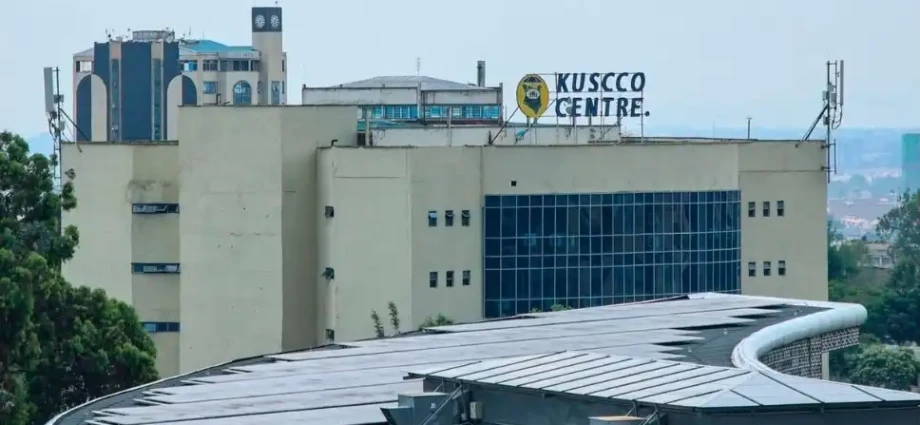
(NAIROBI, KENYA) – Sacco members in Kenya face lower dividend payouts after the regulator directed cooperatives to make additional provisions of approximately KES 7.67 billion ($59.3 million / £44.8 million) for investments held in the insolvent Kenya Union of Savings and Credit Co-operatives (Kuscco).
The provisioning, expected during the current financial year, adds pressure on Saccos already retaining a larger share of their surpluses to strengthen capital. The development sets the stage for a second consecutive year of reduced average payouts to members from profits.
Sacco Societies Regulatory Authority (Sasra) chief executive David Sandagi said in an interview that regulated Saccos had made notable progress in providing for their Kuscco investments. He said approximately KES 7.76 billion ($59.8 million / £45.3 million) remained to be fully provided for in line with financial reporting requirements.
“Regulated Saccos have progressed to continuously provide for the investments in Kuscco. We have noted that there has been very good progress in terms of provisioning for the investments in Kuscco,” Mr Sandagi said. “There still remains about KES 7.7 billion that should, within due course, be fully provided for to comply with the financial reporting standards.”
The provisions look set to affect surpluses available for distribution, particularly for Saccos that still carry unprovided Kuscco investments on their books. The move means the cost of Kuscco’s failure will be absorbed through the financial statements of individual Saccos rather than being left as an asset whose recovery remains uncertain.
In 2025, interest expenses on members’ deposits and dividends on share capital reached a record KES 64.62 billion ($498.1 million / £377.1 million), up from KES 59.74 billion ($460.4 million / £348.6 million) the previous year. However, the share of payouts in total income fell to 37.39% from 39.05% in 2024, the lowest level since 2020 when Saccos distributed 38.31% of their income as firms and households contended with the Covid-19 pandemic.
The declining share of payouts points to a changing Sacco model in which a greater proportion of annual surpluses is retained to build institutional capital and support lending capacity. Saccos may convert the provisions to write-offs depending on how much they recover from Kuscco’s liquidation. Those that had already written off their investments may reverse those write-offs based on recoveries from the process.
In March last year, several Saccos disclosed the size of their Kuscco investments. These included Balozi at KES 437 million ($3.37 million / £2.55 million), Mhasibu at KES 408 million ($3.15 million / £2.38 million), Kimisitu at KES 353 million ($2.72 million / £2.06 million), Qona at KES 134.7 million ($1.04 million / £786,000), Kenpipe at KES 149 million ($1.15 million / £869,000), Sheria at KES 146 million ($1.13 million / £852,000), Stima at KES 108 million ($833,000 / £630,000), Amref at KES 90 million ($694,000 / £525,000) and LSK at KES 19 million ($147,000 / £111,000).
Stima, Kimisitu, Balozi and Kenpipe had made full provisions for their investments as at the end of December 2024.
The regulator cautioned the organisations against underplaying the Kuscco hit while offering generous dividends to members.
Co-operatives and Micro, Small and Medium Enterprises Development Cabinet Secretary Wycliffe Oparanya said the outstanding balance of shares and deposits placed by Saccos in Kuscco had fallen to KES 7.76 billion ($59.8 million / £45.3 million) from KES 16.1 billion ($124.1 million / £94 million) after provisions already made by affected institutions.
Saccos had invested billions of shillings in Kuscco but a PricewaterhouseCoopers forensic audit made public early last year revealed the entity suffered a heist of approximately KES 13.3 billion ($102.5 million / £77.6 million) under the watch of former officials who have since been charged in court.
Mr Oparanya described the provisioning as painful but necessary given that Kuscco’s liabilities exceed its assets and members had recently agreed to liquidate the institution that suffered fraud.
“Efforts to revive Kuscco have not succeeded because of the deep insolvency. Although painful, this is a necessary and prudent reporting decision because the affected funds can no longer be considered recoverable,” Mr Oparanya said during the recent launch of a Sacco sector report.
Some Saccos had last year written off their investments in Kuscco while others opted for staggered provisioning, even as Sasra pushed for stronger capital buffers in the industry. The expected KES 7.76 billion in additional provisions could affect members’ returns next year, coming against a backdrop of falling Sacco payout rates as institutions increasingly retain earnings to build their capital bases.
Sasra’s supervision report for last year shows that the average dividend paid on members’ share capital fell to 10% from 10.46% in 2024. Average interest paid on members’ deposits also declined to 6.72% from 7.14% over the same period.
The regulator attributed the lower payouts to Saccos retaining a larger proportion of their surpluses to strengthen capital and cushion themselves against unexpected losses. The lower payouts coincided with significant strengthening of Sacco capital. Aggregate capital reserves rose 16.27% to KES 229.67 billion ($1.77 billion / £1.34 billion) in 2025 from KES 197.54 billion ($1.52 billion / £1.15 billion), with retained earnings reaching KES 63.45 billion ($489.2 million / £370.2 million).
Sasra said the increase reflected Saccos ploughing more profits back into reserves instead of distributing all their surpluses. The regulator has also linked the stronger capital position to interventions limiting dividends, interest on members’ deposits and other costs where necessary.
Mr Sandagi said the reduction in payouts should be viewed alongside the need to build institutions capable of supporting members over the longer term.
“That very narrative for higher payouts is what has, in certain instances, caused problems,” he said, referring to a culture in which members focused heavily on which institutions offered the highest dividends.
He said the industry is increasingly embracing the need to enhance surplus retention and strengthen capital, noting that retained earnings provide zero-cost capital that reduces reliance on expensive external borrowing.
“What we observed within the year 2025 is that, from a business perspective, Saccos, out of their own volition, recognised the need to enhance retention to bolster their capital,” said Mr Sandagi. “As a regulator, we are also keen to enhance stability. We have kept applying a very keen evaluation of sacco performance, ensuring that payouts beyond those that a Sacco could have initially suggested are equally matched by performance and cash flows and go hand in hand with the long-term sustainability agenda.”
The tension between payouts and capital building is also emerging as Saccos expand their loan books. Gross loans and advances across regulated Saccos increased 12.25% to KES 948.67 billion ($7.31 billion / £5.53 billion) in 2025 from KES 845.11 billion ($6.51 billion / £4.93 billion), while member deposits rose 11.12% to KES 832.74 billion ($6.42 billion / £4.86 billion).
The gap between deposits and loans saw Saccos partly rely on retained earnings and institutional reserves to finance their lending portfolios, making capital retention important for the sector.
Mr Oparanya also warned Saccos against using borrowed funds to maintain member payouts, signalling a regulatory preference for distributions supported by internally generated surpluses.
“I reiterate that no Sacco shall tap external borrowing to pay dividends or interest on deposits. Borrowing may only be undertaken with the approval required by laws and for legitimate productive and sustainable purposes,” he said.
The pressure on payouts is therefore likely to persist as Saccos balance competing demands for member returns, capital accumulation and recognition of losses arising from the Kuscco collapse.
Discover more from Access Radio®
Subscribe to get the latest posts sent to your email.