
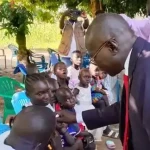



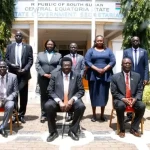


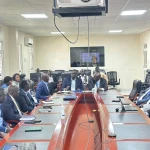

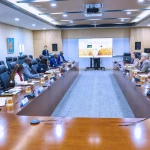
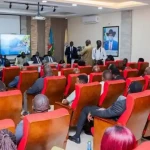


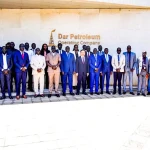

(KAJO-KEJI) – The Commissioner of Kajo-Keji County, Hon. Wani Jackson Mule, has urged local stakeholders and residents to join forces in the ongoing effort to eliminate Onchocerciasis, commonly known as River Blindness, from the region. His remarks were made during the opening of the County Task Force Advocacy Workshop on Thursday, 10th July 2025.
“Health is a shared responsibility,” said Commissioner Mule. “We need every hand, every heart and every home involved. No one should be left behind, especially those living in remote parts of our county.”
River Blindness is a parasitic disease caused by Onchocerca volvulus, transmitted through repeated bites by infected blackflies. It can lead to severe itching, skin conditions, and irreversible blindness. Though the disease is preventable and treatable, it continues to affect many people, particularly in cross-border areas like Kajo-Keji.
Dr. Gonda George Elia, Director of the County Health Department, emphasised that the goal is full elimination.
“We are not just aiming to reduce infection. Our target is total eradication,” he said. “We are grateful for the support of our Ugandan neighbours and the national government. Through joint cross-border meetings, we have been sharing data and strategies to improve our impact.”
He added that regular coordination with Uganda’s Ministry of Health has allowed the programme to address challenges that previously hindered outreach in border communities.
Representing the Department of Gender, Equality and Social Inclusion, Abuk Peter pointed out that inclusive service delivery is key to the programme’s success.
“We are assessing current service gaps to ensure no one is excluded based on gender, disability, or location,” she said. “Health access must be fair and every citizen must benefit.”

The Mass Drug Administration (MDA) campaign, the main tool used to combat Onchocerciasis, involves periodic distribution of ivermectin, a proven anti-parasitic drug. The campaign is being implemented with support from national and local health departments, alongside international partners.
Santino Modi Emmanuel, National Supervisor at the Ministry of Health, warned against the stigma surrounding River Blindness and its victims.
“Public sensitisation is very important,” he said. “Communities must understand that affected individuals are not to be blamed. It is a disease that needs treatment, not discrimination.”
He further urged local authorities to take a more active role.
“We are asking county leaders to regularly report progress, engage directly with communities and ensure the campaign is inclusive and effective.”
The workshop also served to mobilise in kind local support, such as transportation, volunteer manpower, and logistical facilitation, all crucial to the success of the MDA rollout. Stakeholders were updated on campaign timelines, current progress and remaining challenges.
Commissioner Mule concluded with a strong appeal to the wider public.
“We are not just fighting a disease. We are fighting hopelessness. Together, with compassion and cooperation, we can bring light to those in darkness.”
The workshop concluded with renewed pledges from all attending stakeholders to extend the campaign to every village, border post and settlement.
Discover more from Access Radio®
Subscribe to get the latest posts sent to your email.







You must be logged in to post a comment.