

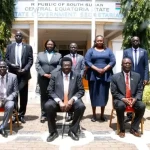








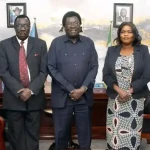

(JUBA COUNTY) – Governor Lt. Gen. Rabi Mujung Emmanuel of Central Equatoria State has met with Florence Gillette, Head of Delegation for the International Committee of the Red Cross (ICRC), to discuss urgent humanitarian interventions for thousands displaced in Kajo-Keji County following a recent border clash involving Ugandan forces.
The high level meeting held on Tuesday at the State Secretariat in Juba comes in response to last week’s cross border event involving the Uganda People’s Defence Forces (UPDF) that triggered a mass displacement in Kajo-Keji, a South Sudanese border county.
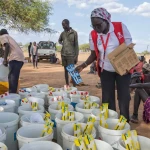
According to the Kajo-Keji County Commissioner, the displacement crisis has affected 2,934 households, amounting to a total of 16,304 individuals. The most immediate humanitarian needs include food supplies, emergency shelter, clean water, cooking utensils and medical support.
Mujung described the situation as urgent and called for accelerated humanitarian assistance to ease the suffering of those displaced. He thanked the ICRC for its longstanding role in supporting communities across Central Equatoria and reaffirmed the state government’s commitment to working closely with aid agencies to deliver life saving services.
ICRC Head of Delegation Florence Gillette confirmed the organisation’s readiness to conduct joint assessments and coordinate closely with state authorities. She stated that the meeting addressed two key areas i.e. the emergency situation in Kajo-Keji and the need for improved coordination among responders.
Gillette also noted that the ICRC had completed and would soon hand over a major water project in Gumbo, Juba. The water scheme, she said, now provides clean drinking water to over 100,000 people, serving as a model for sustainable humanitarian infrastructure in South Sudan.
The Chairperson of the State Relief and Rehabilitation Commission, Hon. Rose Lisok, also voiced serious concerns about the deteriorating conditions in the affected areas. She warned that the crisis is hitting vulnerable groups the hardest, particularly women, children, the elderly and people with disabilities.
“We are facing a very difficult and alarming situation,” said Lisok. “We are grateful to the ICRC for stepping in, but the needs exceed what one organisation can handle. We are calling on other humanitarian agencies to urgently join the response so that we can provide food, water, and basic necessities to the displaced.”
The state government is reportedly coordinating with national agencies and international organisations to ensure an immediate and sustained response to the displacement.
Local leaders have urged the public to remain calm and cooperative with relief workers and security forces. Stakeholders have also reiterated the importance of cross border diplomacy to prevent further incidents and protect civilian lives.
Humanitarian Needs Snapshot for Displaced Households in Kajo-Keji County
| Item / Service | Target Quantity / Beneficiaries |
|---|---|
| Emergency food packs | 16,304 individuals |
| Temporary shelter materials | 2,934 households |
| Cooking utensil kits | 2,934 households |
| Health and medical supplies | 16,000+ individuals |
| Clean water and treatment | 5 community units (estimated) |
| Sanitation kits (soap, etc.) | 2,934 households |
| Basic school supplies | 3,000 school-aged children (estimated) |
Discover more from Access Radio®
Subscribe to get the latest posts sent to your email.