
























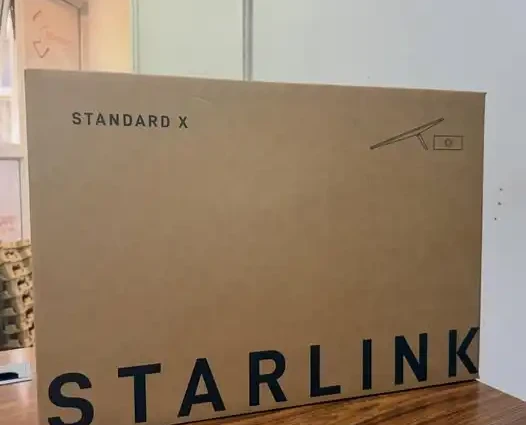
(NAIROBI, KENYA) – New customer sign-ups by satellite internet firm Starlink remain suspended for the third month in eight counties in Kenya due to capacity constraints, even as its enrolled user base climbed to 27,616 by June 2026.
A spot check on 7th October revealed the Elon Musk owned satellite internet provider continues to redirect prospective customers in Nairobi, Kiambu, Mombasa, Machakos, Murang’a, Kirinyaga, Kwale and Kilifi to a waiting list instead of allowing them to complete new orders.
The prolonged freeze comes as new Communications Authority of Kenya data shows Starlink had 27,616 fixed internet subscriptions by the end of June, representing 1% of the country’s 2.84 million fixed connections.
This means Starlink had added 10,191 customers, or 58.5%, in a year, rising from 17,425 subscriptions in June 2025, even as capacity limitations have repeatedly forced the company to restrict new connections.
The June figures also show Starlink accounted for almost the entire satellite internet market in Kenya, with 27,616 of the 27,695 satellite subscriptions, giving it a 99.7% share of the segment.
But its 1% share of the wider fixed internet market remains dwarfed by established terrestrial providers, with Safaricom commanding 36.1% through 1.02 million subscriptions at the end of June.
Jamii Telecommunications, which operates Faiba, followed with 541,003 subscriptions or 19.1%, while Wananchi Group, whose brands include Zuku, had 294,375 subscriptions or 10.4%.
The latest figures indicate that while the American satellite provider continues to attract customers rapidly, its growth is increasingly running into the physical limits of the network serving densely populated areas.
Starlink previously faced a similar capacity problem in late 2024, when it stopped accepting new customers in Nairobi and surrounding counties, a restriction that lasted about seven months before new orders resumed in June 2025.
The latest suspension marks the second major disruption to the company’s customer acquisition in Kenya since its commercial launch in July 2023.
The capacity problem has emerged alongside signs that Starlink’s network performance has come under pressure as more customers join the service.
Speed tests by global network intelligence firm Ookla showed Starlink’s median download speed in Kenya had fallen to 34.55 megabits per second in March 2026 from about 47 Mbps a year earlier, a decline of roughly 26%.
The performance pressure comes despite Starlink’s proposition in Kenya to provide high speed internet without requiring the fibre cables, towers and other infrastructure needed by conventional providers.
Its satellite network has allowed the company to reach homes and businesses in areas where traditional infrastructure can be expensive or difficult to deploy, helping it gain customers beyond the established fibre market.
The wider fixed internet market, meanwhile, is expanding rapidly, providing Starlink with a growing pool of potential customers once capacity becomes available.
Communications Authority of Kenya data shows fixed internet subscriptions increased 32.4% between June 2025 and June 2026, with fibre connections rising 29.7% to 1.57 million.
Terrestrial wireless connections have also expanded, with newer operators using wireless links to reach customers without laying fibre directly to every building.
The competition means Starlink is no longer operating in a market where satellite connectivity is the only alternative for customers outside conventional fibre coverage.
The competitive pressure is set to increase further as Amazon prepares to enter Kenya’s satellite internet market with its Leo constellation, formerly known as Project Kuiper.
Amazon has applied for a Network Facilities Provider licence through its Kenyan subsidiary, Amazon Kuiper Kenya Limited, and plans to establish a satellite ground station in the country.
The planned Kenyan gateway would form part of Amazon’s broader effort to deploy more than 3,200 low earth orbit satellites, putting it in direct competition with Starlink’s satellite broadband business.
Amazon’s entry could give Kenyan consumers another satellite option at a time when Starlink’s own capacity constraints are leaving some prospective customers waiting for service.
Starlink’s own policy confirms that when a residential service region is marked as at capacity, new activations cannot proceed, and the company does not provide a specific timeline for reopening sales.
Customers can, instead, place a deposit to join a waiting list until capacity becomes available.
Discover more from Access Radio®
Subscribe to get the latest posts sent to your email.