














(YEI RIVER COUNTY) – The Episcopal Diocese of Yei in South Sudan’s Central Equatoria State has launched a coffee farming initiative aimed at reducing poverty, boosting economic development and promoting environmental protection through tree planting.
Bishop Levi Marandulu Yepete said on Sunday evening in an interview with Access Radio that the church has chosen coffee farming as a long term strategy to improve community livelihoods.
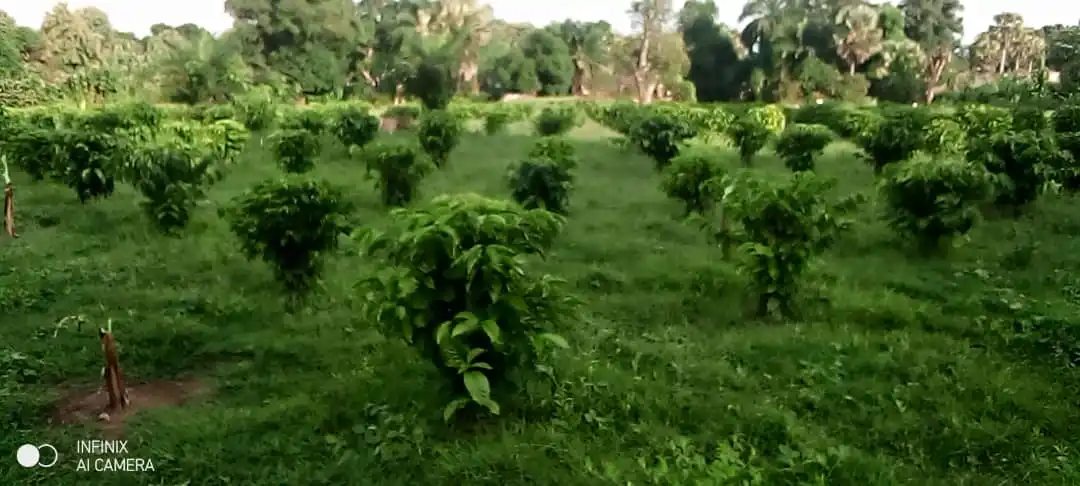
According to him, the diocese consists of 54 parishes, with each cultivating two fedans (approximately 2 acres) of land for coffee, while individual pastors are encouraged to grow even more.
“Our goal is to empower our pastors to work and generate income through farming,” the bishop said.
He urged the youth in Yei River County to consider coffee farming as a valuable economic investment.
“My message to the youth is that coffee is Yei’s natural gold,” he added. “If we commit ourselves to this over the next three to ten years, we will be able to improve our economy and create wealth.”
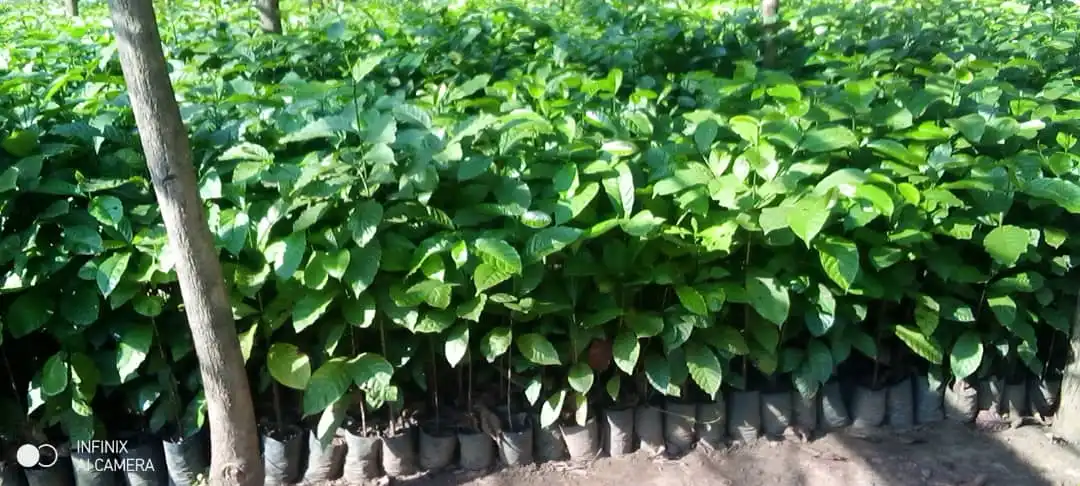
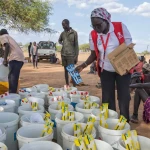
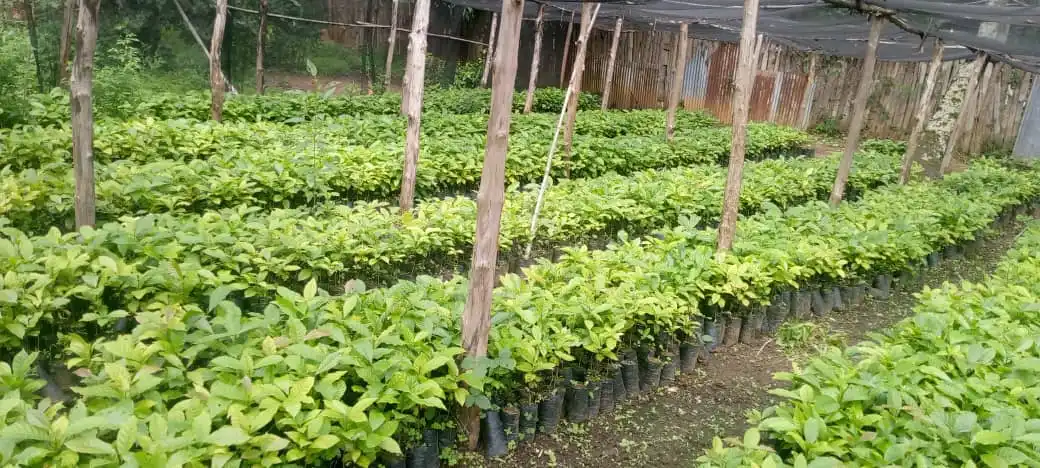
Since the project began in 2023, the church has distributed tens of thousands of coffee seedlings:
Year
Coffee Seedlings Distributed
2023
15,150
2024
21,333
2025
15,000
Photo: Enocka Martin
These seedlings have been provided to pastors, farmers and members of the public as part of the church’s effort to empower local communities and support environmental restoration.
Bishop Marandulu said the church has also been conducting awareness campaigns during Sunday services in both rural and urban areas to highlight the importance of investing in coffee farming. He appealed to the government to channel more resources into agriculture, especially to support youth and farming communities in growing both food and cash crops.
“We hear on the media that millions of dollars and South Sudanese pounds are being allocated to agriculture, but we don’t see this support on the ground,” he said. “We need real action.”
He also stressed the importance of restoring peace and stability to allow farmers to cultivate freely.
“Peace and security are vital for development. Many farmers are still afraid to go outside Yei town due to insecurity. We are calling for peace. It is what our people want.”
Isaac Asiki, the Director of Agriculture in Yei River County, praised the church for empowering communities through agriculture. He encouraged residents to take advantage of the rainy season to grow both food and cash crops.
Episcopal Church Launches Project to Revive Yei Coffee Industry 2025 News
Although Asiki acknowledged the limited resources available to his department, he said the office is offering civic education, technical training and advisory services to support coffee farmers. He called on development partners to include coffee and other cash crops in their programmes to strengthen local economies.
In the local market in Yei town, a small mug of processed coffee now sells for around 15,000 South Sudanese Pounds (SSP), which is approximately $3.26 USD at the June 2025 official exchange rate of $1 = 4,600 SSP.
However, residents say local organic coffee is increasingly hard to find.
Alfred Soro, a regular coffee consumer in Yei, said, “We don’t have Yei’s organic coffee in the market because demand is high. Most of what we drink comes from Congo or Uganda, but we really want our own Yei coffee.”
Yei was once South Sudan’s main coffee producing area, supplying markets in Juba, Khartoum and abroad during the early 1980s. In 2016, the international organisations TechnoServe and Nespresso confirmed that Yei’s coffee ranked among the best in global markets, including France, the UK, Germany, Switzerland, the Netherlands and the United States.
Since 2011, these organisations have supported South Sudanese coffee farmers through training, cooperative formation and the construction of wet mills. The programme has trained more than 700 farmers and helped establish the country’s first five coffee cooperatives.
The first coffee beans to be exported from South Sudan reached France with the stated aim of diversifying an economy largely dependent on oil exports.
Although insecurity in recent years has disrupted the sector, efforts to maintain knowledge and production continue. TechnoServe and Nespresso have introduced remote assistance through radio broadcasts and agronomy advice hotlines.
The shift to coffee comes at a time when traditional food production in Yei has significantly declined. According to a 2019 report by the United Nations Mission in South Sudan (UNMISS), January used to mark the season of agricultural plenty in Yei. But conflict has disrupted large scale farming and forced many residents to abandon their fields.
Despite the challenges, local farmers in Yei have shown strong determination and resilience, keeping the dream of a revived coffee industry alive.
Listen to Access Radio 88.8 FM ONLINE
Follow on WhatsApp, Facebook and X
Got a story to share?
Help us cover the stories that matter. Send your news tip via WhatsApp: +211 927 588 870 or email: news [at] radioyei.org.