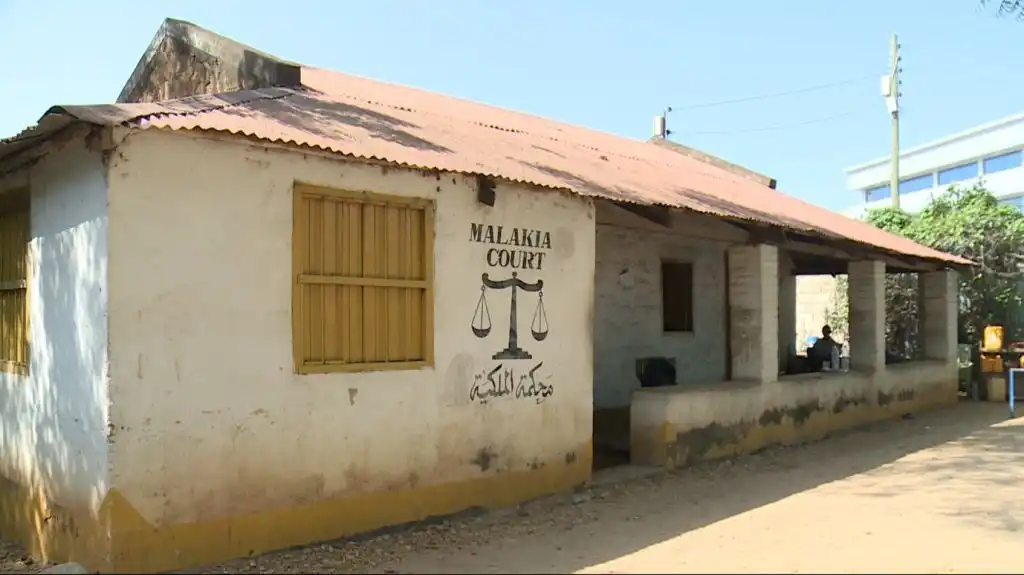
Malakia Court Premises, one of the structures we had in Juba/Photo: Oyet Patrick Charles
I dearly miss the old Juba, a place where you could board a mwasalat (taxi), and instead of telling the driver to stop, a simple finger snap would signal your destination. Getting around the city cost no more than a single dinar, often just a coin, a kumsumia (fifty cents). That was the Juba I knew and loved.
Back then, conductors were usually children. You would pull out a coin to pay, only to be told someone had already settled your fare. I remember a Ugandan engineer friend who was so charmed by life in Juba that he swore to rename his entire family after Juba locations, his son to Hai Malakal, his daughter to Malakia and his wife to Juba Raha.
Nostalgia at Its Finest
In 2007, while working at Bakhita Radio, I witnessed the city’s warmth. There were few restaurants then, but we had Mama Zahara’s, a beloved local spot known for foul masr (beans), fish, roasted chicken and soft bread, often served with a Coca-Cola. Many times, a stranger would quietly pay your bill, no fuss, just kindness.
Compare that to now. A friend recently went to eat at a restaurant near my home. After his meal, he was shocked by the $10 bill, money he didn’t have on him. I had to rush over when he called, fearing the situation would escalate. In the old Juba, such drama was unimaginable. He would have been allowed to leave and pay another time.

When Safety and Simplicity Ruled
Juba was safe, unmarred by today’s gangs and groups. However, few homes had toilets. Most of us dug makeshift ones, especially in the evening. Public toilets, mostly in market areas, cost a kumsumia. Upon paying, you would receive a tiny bit of toilet paper and a sliver of soap. Sometimes the toilet paper was so small it was practically useless but still, I miss those days.
Today, every home has a latrine and a bathroom. Yet even this comes with problems. I once hung my trousers on a bathroom hook and emerged from my shower to find them stolen. I had to sneak back into the house naked, bent over like someone with stomach ulcers. I feared someone might walk in or, worse, snap a photo and post it on Facebook. Thankfully, that didn’t happen.
Before Social Media Took Over
The Juba I miss had no Facebook or WhatsApp and no trolls, misinformation or abusive language. People met in person. Sudani and Zain were the only telecom providers, followed later by Gemtel. Buying a SIM card was harder than buying a handset. Thieves often stole your SIM and discarded your phone. SIM cards cost $100 and once stolen, that was the end. There were no tracking systems.
The roads were dusty, the weather hot and houses with perimeter walls were rare. Traffic police didn’t demand logbooks and vehicles bore “New Sudan” (NS) plates or “CETP” stickers for Central Equatoria’s temporary registrations. Goods from Uganda and Kenya arrived via Kaya–Yei. The now-popular Juba–Nimule Road was unusable due to landmines.
Life Before V8 Obsession

Fuel guzzling V8s were not a trend. General Isaac Obuto Mamur owned a rare fleet of Hummers and Jeeps, and a few elites had “Big Horns.” Hotels were few: Mango Camp, Civicon (now Oasis). South Sudanese women rarely worked in hotels due to cultural taboos. I remember when my brother’s wife was offered a receptionist job at Juba Grand Hotel. My brother refused, seeing hotel work as morally questionable. Many hotel workers were flown in from the Philippines. Interestingly, my brother seems to have changed his stance today.
Cultural Shifts and Political Explosion
We did drama rehearsals at Kumoyangi Primary School, which Landmark Hotel has now replaced. I recently visited the hotel, hoping to feel the school’s spirit. It was gone.
Politically, things were simpler then. We only knew SPLM, SPLA, the National Congress Party (NCP) and Sudan Armed Forces. Today, we reportedly have nine “commanders in chief,” countless unknown gunmen and over 30 political parties.
Indeed, Juba has changed.

DISCLAIMER: Access Radio® aims to encourage informed public discourse. Views expressed in opinion articles are intended to stimulate discussion and do not reflect editorial endorsement.
Have something to say? Submit your opinion piece to news [at]radioyei.org. Submissions may be edited for grammar, clarity or length before publication.
Discover more from Access Radio Yei News
Subscribe to get the latest posts sent to your email.