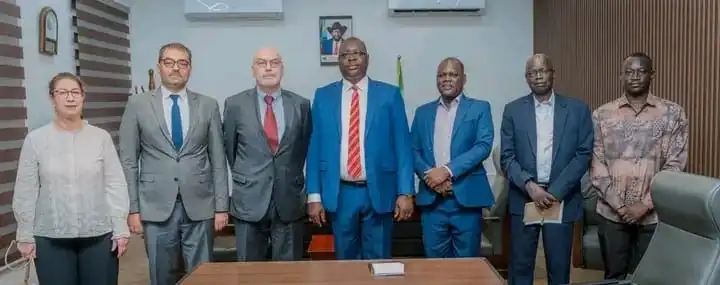
Photo: Radio Miraya
(Juba) – South Sudan has announced a major four year education initiative worth $58 million (approximately 270.4 billion SSP at official exchange rates or 406 billion SSP on the parallel market), aimed at improving basic education for the country’s most vulnerable children, including girls, children with disabilities and those from pastoralist communities.
The programme led by the Ministry of General Education and Instruction in partnership with the Global Partnership for Education (GPE) is expected to directly benefit more than 300,000 learners and indirectly support another 600,000 across 20 counties, including Jonglei, Lakes and the Greater Pibor Administrative Area.
The project aims to improve access to school, raise education quality and make learning more inclusive by combining three GPE funding streams into one cohesive government led programme.
It is the latest in a series of efforts to address South Sudan’s significant education gap, with more than 2.8 million children, roughly 70 percent, still out of school.
Education Minister Dr Kuyok Abol Kuyok described the new initiative as a “lifeline” for children in crisis.
“This funding will provide life saving educational opportunities for hundreds of thousands of girls and boys,” he said, appealing for continued support from the international community.
The programme includes a System Transformation Grant to reach at least 250,000 learners, including 3,000 children with disabilities and over 1,000 from pastoralist families.
In addition, the Girls’ Education Accelerator component will provide tailored support to 33,000 girls, helping address some of the barriers that prevent them from attending or staying in school.
Beyond students, the initiative is set to train and support more than 7,000 teachers, improve educational policy making capacity and promote learner friendly approaches such as accelerated education and comprehensive sexuality education.
These approaches aim to create safer and more accessible learning spaces for all children, regardless of background or ability.
Christopher Nyamandi, Country Director for Save the Children in South Sudan, said the programme is about more than classrooms and textbooks.
“This is more than an education project. It is an investment in peace, inclusion and the future of South Sudan,” he noted.
Obia Achieng, the acting UNICEF Representative, also voiced similar sentiment.
“Boys and especially girls have been shortchanged for too long. Now is the time to open doors and deliver the promise of education.”
While the funding and partnerships are significant, success will also depend on local implementation and sustained engagement from both national and international partners.
Discover more from Access Radio Yei News
Subscribe to get the latest posts sent to your email.