














(JUBA)-When 23-year-old Hellen Ajith opened the small bag she had just received, she smiled. Inside were reusable sanitary pads, pair of panties, bar of soap, torch and other basic hygiene items, things she says she had never owned together before.
“For the first time, I have received a dignity kit like this,” said Ajith, a resident of Goroyo. “It will help me take care of myself during my menstrual period.”
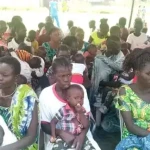
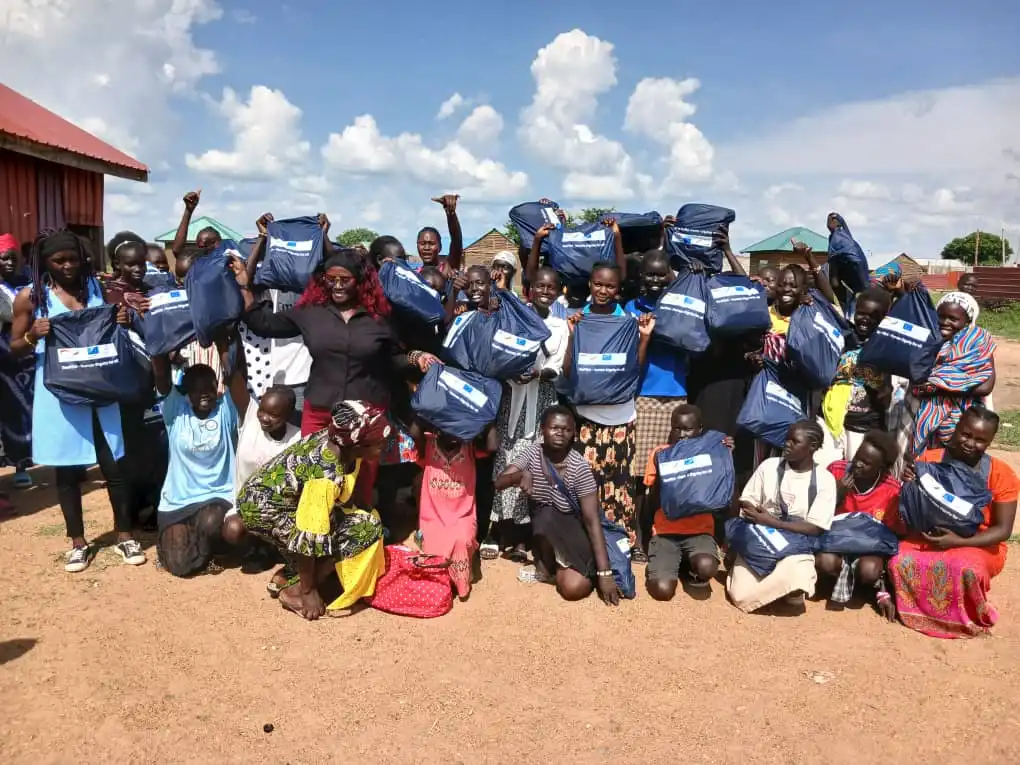
Ajith was among more than 130 schoolgirls and young mothers from Goroyo, Gumbo and Nyakuron residential areas who separately received dignity kits through a project implemented by the Women Foundation for Humanity.
For many of the beneficiaries, the kit offers relief at a time when South Sudan’s worsening economic crisis has pushed sanitary products beyond the reach of many families, forcing some girls to miss school during their monthly periods.
The initiative is funded by the German Corporation, co-funded by the European Union and implemented by GIZ in partnership with the Women Foundation for Humanity.
Speaking during the distribution, Executive Director of Women’s Foundation for Humanity, Dorothy Drabuga Ambrose, said no girl should have to choose between managing her menstrual health and attending school.
“We are here to give dignity kits to vulnerable girls and women because we know the challenges they face during menstruation,” Ambrose said. “We don’t want our girls to stay out of school simply because they are having their periods. Menstruation is natural, and it should never stop a girl from getting an education.”
“For women, it cannot stop you from doing other things just because you are in your ministerial period. This is nature.”
Each kit contains reusable sanitary pads, a bar of soap, panties, a torch and other essential hygiene items designed to help girls safely manage their menstrual health.
Ambrose said the organization chose reusable pads because disposable sanitary products have become unaffordable for many households.
“This is a reusable pad because we know now the economic situation is very bad, especially for school-going girls. You cannot afford to buy every month. These reusable pads can be washed and used again,” she said.
She encouraged beneficiaries to maintain good hygiene by washing the pads properly with the soap provided and using the kits only for their intended purpose.
“Keep yourselves clean and take care of these materials. Please don’t sell them because they are meant for your health and dignity,” she said.
For Susan Mamini, a 29-year-old mother of one from Gumbo Sherikat, the donation addresses a struggle many mothers face every month.
“These kits are very important,” she said. “With the current economic hardships, it has become very difficult for young girls to afford sanitary pads.”
She said many households are now supported by women who must stretch limited incomes to cover food, school fees and other essentials.
“When money is not enough, parents buy food first. Pads become an option,” Mamini said. “That means some girls stay home from school because they have nothing to use during their periods.”
She called on humanitarian organizations and development partners to expand similar distributions to schools so that girls from poor families can continue their education without interruption.
Across South Sudan, soaring inflation and declining household incomes have made even basic hygiene products increasingly unaffordable.
Education and health advocates warn that inadequate access to menstrual hygiene products remains a significant barrier to girls’ education, with many missing several days of class each month during their menstrual periods.
Discover more from Access Radio®
Subscribe to get the latest posts sent to your email.