
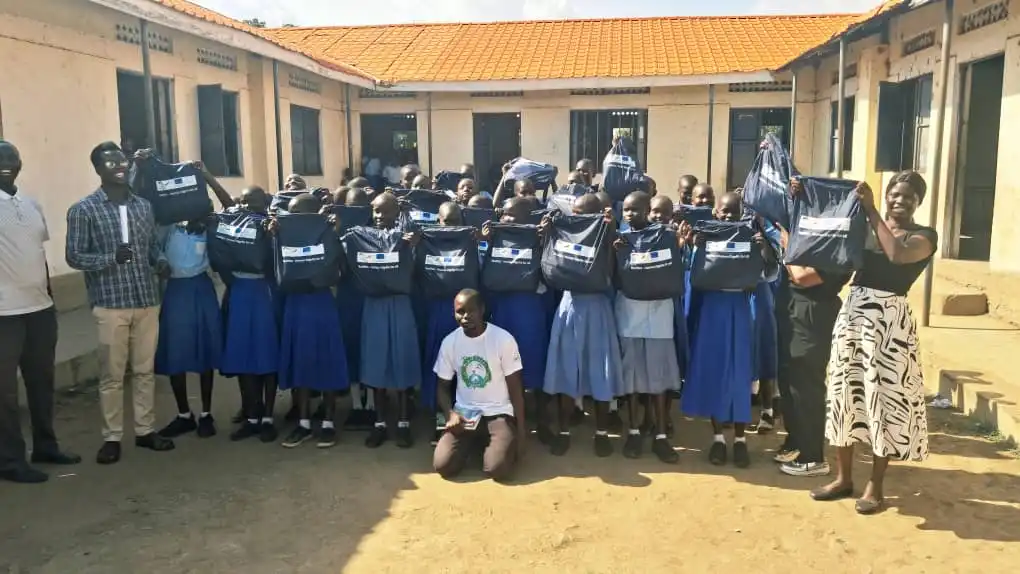
Pupils of JCC Hai Negil, Gondokoro Branch
(JUBA)-Mary Kapuki was not expecting visitors. Her school, JCC Hai Nagil Island Nursery and Primary School, Dokobur Branch, sits deep inside a village on Gondokoro Island, so isolated that, she says, even people living nearby often do not know it exists.
So when a team from the Women Foundation for Humanity arrived in July carrying dignity kits filled with reusable sanitary pads, soap, sandals and other basic hygiene items, the Primary 7 pupil and head girl could hardly believe it.
“I am so happy because no one knows that there is a school in this, inside the village,” Mary said. “You brought those things, we are so happy.”
For Mary, the gift means more than receiving hygiene supplies. It eases one of the everyday challenges that many schoolgirls face as South Sudan’s economic crisis pushes the cost of basic necessities beyond the reach of many families.
Before receiving the kit, Mary managed her monthly period the only way she knew. Her mother would buy a disposable sanitary pad, which she used once before throwing it away because there was no practical way to wash and reuse it.
“We are using the other one for one day. If you use it, then you will throw it out,” she said. “That’s why we are using the other one.”
Mary is among more than 130 schoolgirls and young mothers from three communities, including JCC Hai Nagil school in Gondkoro Island, Jebel Dinka and Jebel Yesua, who received dignity kits this month from the Women Foundation for Humanity.
The distribution forms part of a broader effort that is delivering 500 kits across communities in Juba especially in Gondokoro Island.
For older girls and young women, the support comes as the country’s economic hardship continues to drive up the price of essential hygiene products.
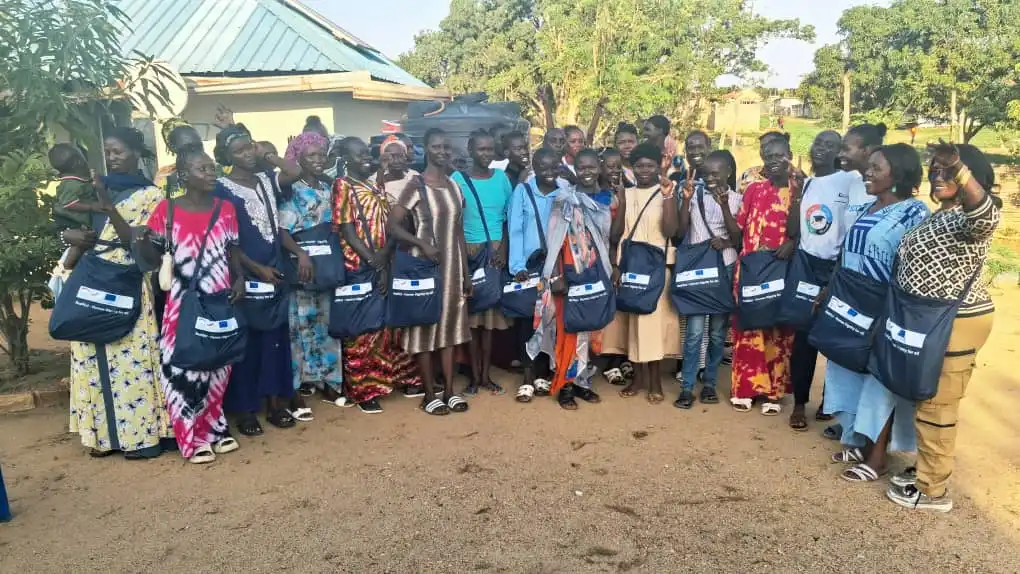
Alual Tito Alphonse, 22, a student at the University of Juba who lives in Jebel Dinka, said a packet of sanitary pads now costs about 7,000 South Sudanese pounds, making it difficult for many young women, particularly those with heavier menstrual flows.
“Sometimes you may change three times in a week, sometimes two times or four, if your period is overflowing,” she said. “That one, even the crisis of the pad is now 7,000. It is also giving us a hard time.”
The reusable kit she received, including washable pads, soap and a torch, will last for months instead of days, reducing a recurring expense her family has struggled to meet.
Another University of Juba student, Awan Dhieu Kuac, said the reusable pads will allow families to spend their limited income on other pressing household needs.
“We have been suffering to buy pads,” she said. “Now with this one, I am not going to be buying, at least I will buy another thing that I am lacking.”
Dorothy Drabuga Alphonse, executive director of the Women Foundation for Humanity, said the distribution is also intended to help girls remain in school and reduce one of the barriers that contributes to absenteeism.
The distribution is part of the RESPECT Project, Respond, Prevent, Educate, funded through German development cooperation, co-funded by the European Union and implemented by GIZ in partnership with the Women Foundation for Humanity as part of efforts to prevent sexual and gender-based violence.
“In some places girls even use leaves or dirty clothes, which is not healthy, which is infectious,” Drabuga said. “The economic situation is very bad, we can’t afford to buy pads every month.”
She said many girls begin missing classes after being caught off guard by their periods at school. Some stain their uniforms, become targets of teasing from boys and choose not to return for days or even abandon school altogether.
“Menstruation should not keep you out of school or from other activities,” she said. “This is nature, and this is what every woman goes through.”
Drawing on her own childhood experience, Drabuga urged the girls not to be ashamed of menstruation. She recalled hiding her first period from her mother and secretly making makeshift sanitary pads from cotton wool because she was afraid to ask for help.
“So I am saying, I’m encouraging you girls, be open, because this is not a sin,” she told the students.
At JCC Hai Nagil Island Nursery and Primary School, Senior Woman Teacher Martha Poni Ladu said the donation addresses a need she has witnessed for years, particularly among orphaned children and those without parental support.
“Some of the pupils here, they don’t have money to buy such kind of things, sandals, even socks, because some of them are staying without a parent,” she said. “We have a lot of orphans here.”
Without such support, she said, some girls have been forced to stay home because they simply cannot afford basic personal items.
“Today, what you have given them, I’m sure they also appreciate you like the way I appreciated you,” she told the organization. “If you have any help, even more than that, you can bring to our school, because our school needs a lot.”
Discover more from Access Radio Yei News
Subscribe to get the latest posts sent to your email.


