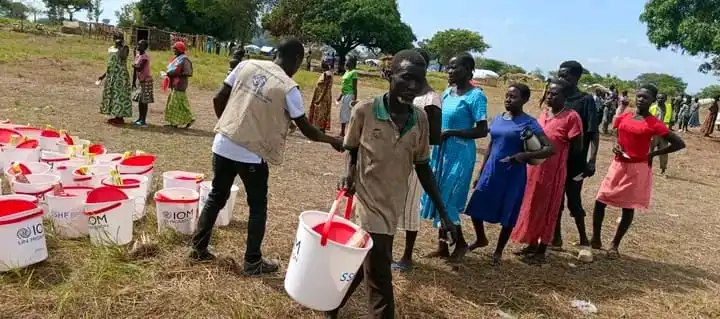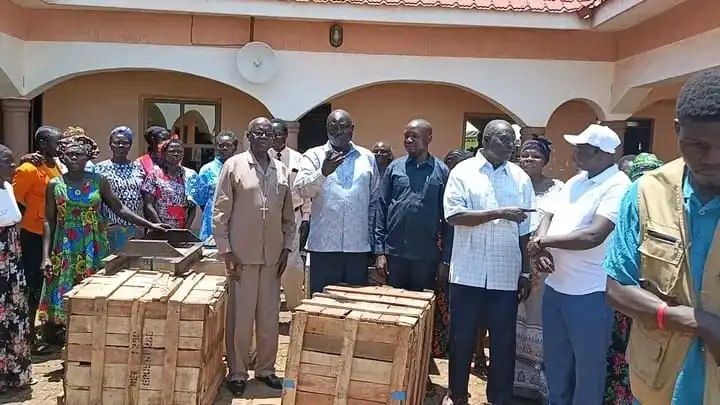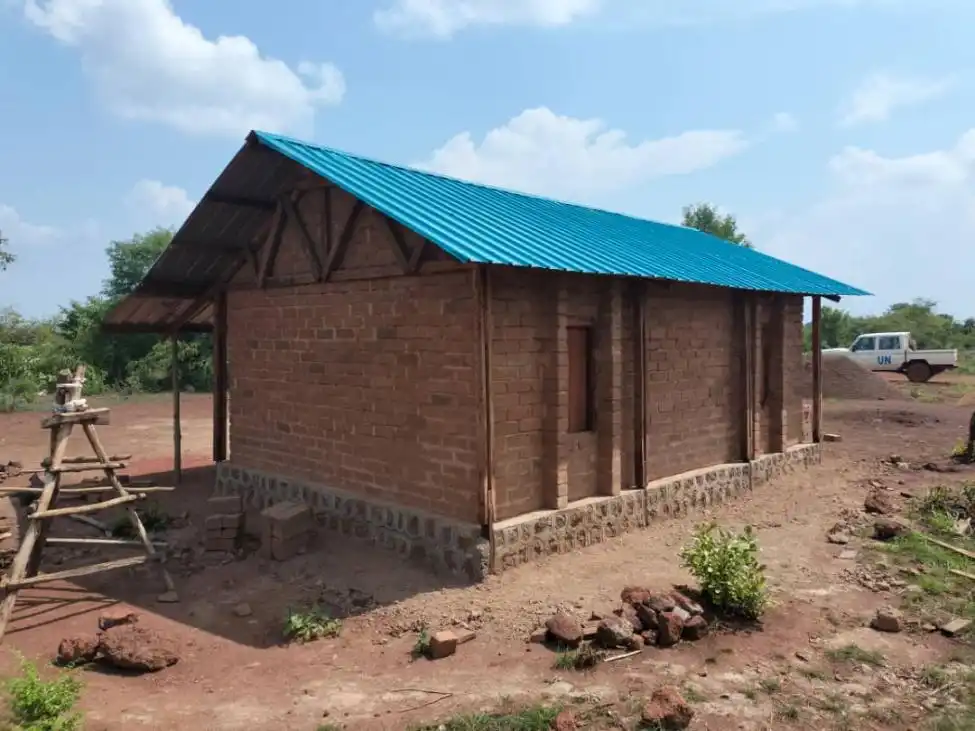
IOM’s durable housing model supports displaced families’ return and reintegration/IOM PHOTO
(JUBA) – The International Organization for Migration (IOM), in partnership with the University of Juba and with support from the European Union, held a major public lecture in Juba on 29 July 2025 to discuss how housing, land and property rights can support recovery for millions of displaced people in South Sudan.
The event brought together over 300 participants from government institutions, universities, civil society organisations and international agencies. Discussions focused on the importance of sustainable land access as a foundation for peace, self reliance and development.
Vijaya Souri, IOM Chief of Mission in South Sudan, said reclaiming land or a home remains a vital step in the lives of displaced families striving to rebuild.
“Each claim represents a family striving to rebuild. Restoring these rights is key to establishing a more secure future for themselves and the generations to come,” she noted.
More than two million South Sudanese remain displaced within the country, while thousands more are returning from Sudan, where ongoing conflict has forced them to flee. Yet many of these families face major challenges in resettling, largely due to unresolved land disputes, unclear ownership, or lack of access to formal documentation.
Without secure access to land, families are unable to build homes, grow food or invest in sustainable livelihoods. This hinders national recovery efforts and leaves returnees vulnerable to further displacement.
Professor Robert Mayom, Vice Chancellor of the University of Juba, said academic institutions in South Sudan have a major role to play in contributing to national dialogue on land management. He called for stronger engagement from scholars in shaping policies that can respond to the realities of post conflict communities.
The public lecture included panel discussions on legal and social barriers to land ownership, the role of local dispute resolution, and the need for coordinated national land policy and legal reform. Participants agreed that clear and inclusive land governance is essential for ensuring long-term stability and peaceful reintegration.
IOM’s broader efforts in South Sudan include legal aid services, support for community dialogue, and technical assistance to government bodies working on land tenure. Through these initiatives, IOM aims to help displaced people access land legally and voluntarily return to rebuild their lives.
According to IOM, secure land access is not only a recovery issue, but also a central part of peacebuilding and sustainable development. It forms a key pillar of the United Nations Secretary-General’s Action Agenda on Internal Displacement, which calls for more durable and locally driven solutions.
The lack of land access affects not only the return of displaced families but also South Sudan’s agricultural sector, housing development, and service delivery in areas of return. Ensuring that people can legally own or use land is therefore critical for rebuilding both livelihoods and communities.
South Sudan continues to face major challenges in resolving land ownership issues, many of which are rooted in historical conflicts, overlapping claims and limited enforcement of existing land laws. In rural areas, customary ownership systems often clash with statutory legal frameworks, making resolution even more complex.
IOM and its partners urged for stronger collaboration between government, traditional authorities, civil society and academic institutions to create policies that are inclusive and practical.
Discover more from Access Radio Yei News
Subscribe to get the latest posts sent to your email.