







(Juba) – A new model of humanitarian aid delivery has emerged in South Sudan, where food drops are being carried out by private American companies run by former military and intelligence officers. The latest such mission, which took place last week, saw sacks of food airdropped over the Upper Nile town of Nasir, an area heavily affected by ongoing conflict.
The operations are being led by Fogbow, a for-profit company whose leadership includes retired CIA officers and ex-U.S. military officials. They describe their efforts as humanitarian, combining security and logistics skills honed in war zones to support vulnerable populations in crisis regions like South Sudan and Gaza.
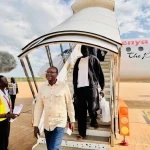
“We’ve worked in conflict zones for years and know how to make things work in hard environments,” said Michael Mulroy, Fogbow’s president and a former Pentagon official during the Trump administration. Speaking from the airport tarmac in Juba, he emphasized that Fogbow was not seeking to replace traditional humanitarian organizations.
The South Sudanese government, which is reportedly paying for these airdrops, has said that such private-sector aid is necessary due to deep funding cuts from donors, including the U.S. Agency for International Development (USAID) during the Trump years. Humanitarian Affairs Minister Albino Akol Atak stated that the government plans to expand these operations across the country.
However, many humanitarian groups and observers have expressed alarm at the growing trend of outsourcing humanitarian operations to military-linked private firms. They say it blurs the line between neutral aid and political or military objectives.
“What we’ve learned is that a humanitarian operation is not the same as a logistics or security operation,” said Scott Paul, a director at Oxfam America. “Simply dropping food does not mean aid is effective—it can even endanger people.”
In Gaza, a similar situation is unfolding. Safe Reach Solutions, another U.S.-based private contractor led by ex-CIA personnel, is helping to distribute food under the direction of the Israeli government. Critics argue the operation is being used to relocate Palestinian civilians in line with Israeli military strategies. Several hundred Palestinians have been killed or injured attempting to reach aid drop zones, according to Gaza health officials. Israel denies targeting civilians but confirms firing “warning shots” in some cases.
In South Sudan, civil society voices are also expressing concern. Edmund Yakani, of the Community Empowerment for Progress Organization, warned that such aid programs could serve military purposes under the cover of humanitarian action. “We don’t want to see humanitarian space abused by military actors,” he said.
Mulroy dismissed those concerns, claiming Fogbow coordinates with the UN’s World Food Programme (WFP) to ensure that aid reaches civilians. However, WFP’s country director, Mary-Ellen McGroarty, issued a statement clarifying that the UN agency is not involved in planning, targeting, or distributing food dropped by Fogbow on behalf of the South Sudanese government.
There is also growing concern about the long-term consequences of this approach. Jan Egeland, head of the Norwegian Refugee Council, warned that when governments in conflict are allowed to dictate aid delivery, it leads to unequal access and deepens divisions. “Why would the U.S. now support what it has resisted in every war zone for two generations?” he asked.
Analysts like Mark Millar, a former humanitarian adviser to the UN and British government, cautioned that private military firms bring a business-first approach that can undermine the principles of humanitarian neutrality. “Once let loose, they seem to be even less accountable,” he said.
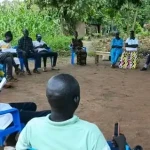
Despite the controversy, Fogbow’s operations continue. Last week’s 16-ton drop included corn, beans, and salt for civilians displaced by recent fighting in the Upper Nile region. While the scene appeared calm, questions remain about the long-term implications of having private security contractors lead food relief operations in fragile states like South Sudan.
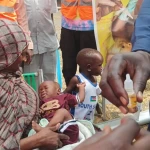
The aid deliveries come as South Sudan faces a worsening crisis, with around 9 million people—75% of the population—needing humanitarian assistance. The country has also struggled with corruption and underinvestment in its health and food systems since gaining independence in 2011. According to observers, turning to military-linked contractors may be a short-term solution with long-term costs.
Discover more from Access Radio®
Subscribe to get the latest posts sent to your email.