
















One of the issues I am deeply passionate about is encouraging and mobilising our people to embrace wealth creation as a pathway out of poverty. Sustainable economic empowerment begins with recognising and productively utilising the resources that already exist within our communities.
Across Africa, governments are not comprehensive welfare providers. While they have a responsibility to build infrastructure, deliver public services, and create an enabling environment for economic growth, they cannot place money directly into every citizen’s pocket. Individuals, families, and communities must also take initiative to identify opportunities and build sustainable livelihoods.
For the people of Yei and South Sudan as a whole, we are blessed with fertile land, favourable climatic conditions, and abundant natural resources. Yet poverty remains widespread despite these advantages. This raises an important question: Are we truly poor in resources, or are we failing to recognise and harness their economic potential?
Recently, during an international flight within Africa, I was surprised to discover Yawa ti kwilikwili (also known as kpilikpili), a wild fruit familiar to many Kakwa people, being served among the desserts on board. I smiled as I recalled eating the same fruit in the forest during hunting trips. What we considered an ordinary wild fruit had found its place in international cuisine.
Someone, somewhere, recognised its value, developed a market for it, and connected it to consumers willing to pay for it. That simple fruit had become part of an economic value chain, generating income and supporting livelihoods. The lesson is clear: wealth creation does not always require discovering something new. Often, it involves recognising the commercial value of what already exists around us.
A few years ago, during a field trip to Rumbek, I purchased wild fruits locally known as maake or makiya and shared them with a foreign colleague. To my surprise, she enjoyed them and even asked for more. That experience reinforced my belief that products regarded as ordinary in one community can possess significant value in another market.
Among the Kakwa community, there are numerous indigenous products with untapped economic potential. These include wild fruits such as lariko, Lomu’da, mala-mala, and kumoro (lulu); edible roots like Alijibe; and traditional vegetables such as Lu’butere, koyikoyi, and Undu’bele (jer molulu). Through organised production, value addition, attractive packaging, and reliable market access, these resources could generate income for households, create jobs for young people, and stimulate local economic growth.
Interestingly, some products that may not be commonly consumed within our own communities already have thriving markets elsewhere. Certain neighbouring communities consider rats a delicacy, while snail meat is commercially traded across parts of West and Central Africa and is available in some supermarkets in Juba. Such examples demonstrate that entrepreneurship is not necessarily about what we personally consume or value. Rather, it is about understanding what others are willing to purchase and meeting that demand responsibly, safely, and legally.
That is the essence of entrepreneurship: identifying a need, creating value, and generating income in the process.
Our youth, women, professionals, and members of the diaspora should begin looking beyond conventional employment opportunities and explore indigenous food production, processing, agribusiness, and rural value chains. With investment, entrepreneurial skills, market linkages, and sustainable management of natural resources, these sectors could transform livelihoods and strengthen local economies.
We cannot continue lamenting poverty while overlooking the economic opportunities that exist in our land, culture, and indigenous knowledge systems. Government support remains important, but individual initiative, innovation, and collective investment are equally essential.
Wealth creation begins with a change in mindset. We must learn to see opportunity where others see ordinary things. We must transform local resources into productive assets, indigenous knowledge into thriving enterprises, and our natural endowments into sustainable prosperity.
The opportunities we seek may not be far away. In many cases, they are already growing in our gardens, forests, rivers, and fields. The challenge is whether we are prepared to recognise their value and turn them into engines of economic growth.
About the Author
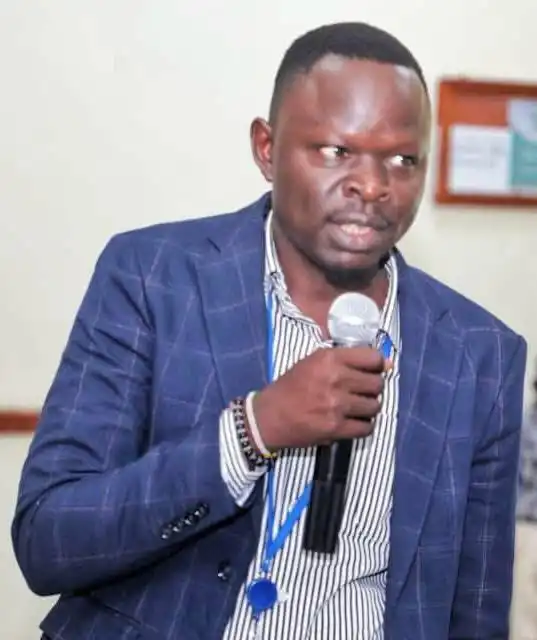
Taban Kwaje is a South Sudanese development practitioner, scholar, writer, and advocate for community empowerment and local economic development. He writes regularly on issues of economic empowerment, community development, governance, and social change in South Sudan.
Disclaimer:
The views and opinions expressed in this article are those of the author and do not necessarily reflect the editorial position of Access Radio 88.8 FM, its management, staff, or partners. Access Radio publishes opinion articles to promote public dialogue and civic engagement on issues of community interest.
Discover more from Access Radio®
Subscribe to get the latest posts sent to your email.