













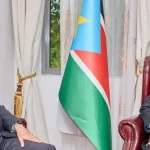
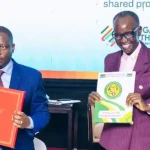





(Juba) – The Governor of the Bank of South Sudan, Dr Addis Ababa Othow, met with the World Bank Country Director, Mr Charles Undeland, on Monday to discuss the future of digital banking in South Sudan.
The meeting focused on how to increase public understanding and build partnerships to support the country’s digital financial transition.
Dr Othow shared updates on the Central Bank’s progress, including efforts to bring mobile money operators on board and campaigns to encourage the public to adopt digital payments for daily transactions.
He stressed the need for inclusive participation and strong regulatory frameworks to support digital transformation. According to the Governor, clear rules and public trust are key for the growth of mobile and online banking services.
Mr Undeland confirmed the World Bank’s continued support for South Sudan’s financial development. He said that the success of digital banking depends on shared responsibility between the government, the private sector, and communities.
Two senior Central Bank officials were also present at the meeting:
+Dr Chan Andrea, Director General for Banking Operations
+Dr Majok Kuol Mading, Director General for Banking Supervision and Financial Stability
Dr Chan explained that modernising the country’s financial system is one of the Bank’s top priorities. He added that improving financial stability will create a stronger foundation for long term development.
| Focus Area | Details |
|---|---|
| Mobile Money Operators | Engaged in rollout and expansion |
| Public Awareness | Campaigns to inform citizens about digital payments |
| Regulation | Frameworks being developed to protect users and ensure transparency |
| Financial Inclusion | Aimed at reaching people in rural and remote areas |
| World Bank Support | Technical and advisory backing for digital systems |
Digital payment systems are expected to reduce cash handling risks, improve transaction speed and promote economic participation. However, challenges remain, especially in rural areas where access to mobile phones, internet and banking services is still limited.
Many South Sudanese still rely heavily on cash. In urban areas such as Juba, mobile wallets and electronic payments are slowly gaining popularity, but rural communities face barriers such as lack of internet coverage and digital skills.
Building a strong and inclusive digital economy is seen as one of the key steps toward long term development and national resilience as the country continues to recover from years of conflict and instability.
Discover more from Access Radio®
Subscribe to get the latest posts sent to your email.