





(JUBA)-South Sudan’s government says it is committed to holding peaceful national elections in December 2026, even as insecurity persists in parts of the country where armed groups remain active.
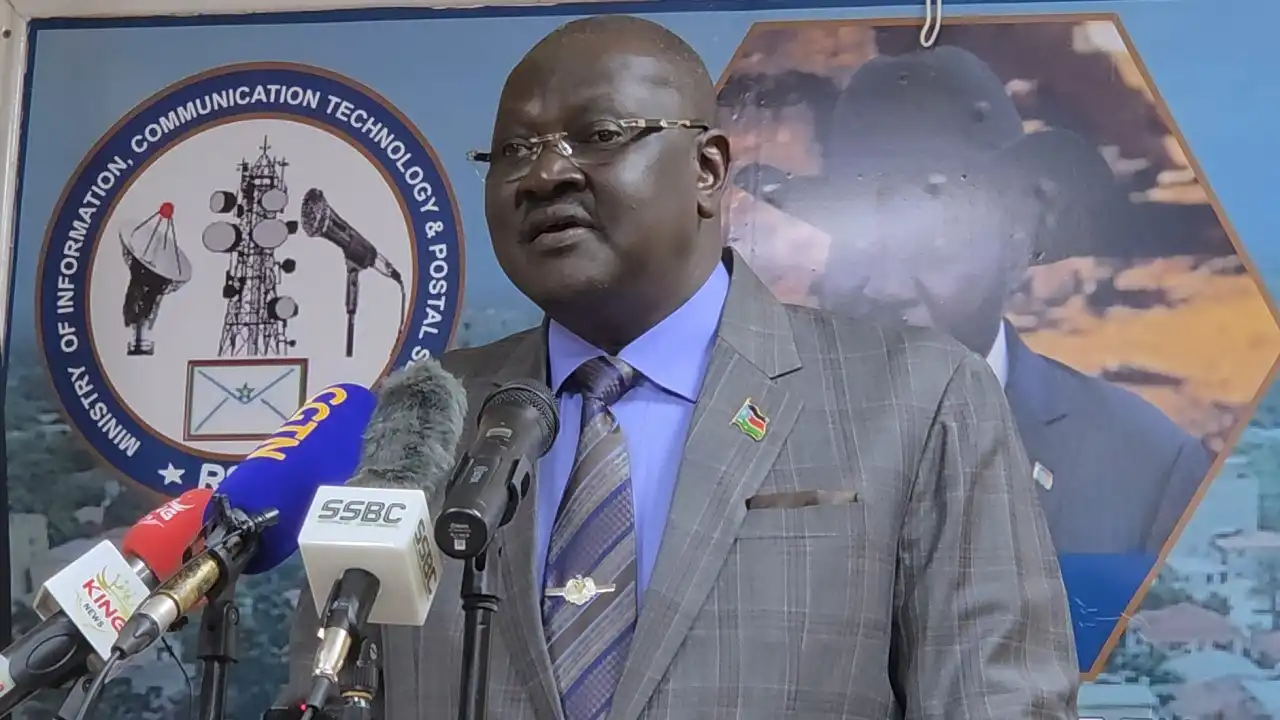
Speaking to journalists in Juba on Tuesday, Information Minister Ateny Wek Ateny said most of the country was experiencing relative calm, but acknowledged pockets of instability, particularly in parts of Northern Jonglei.
“As a general security situation in the country, I want to say the country is experiencing relative peace… except for some pockets in Northern Jonglei,” he said.
His remarks come against a backdrop of recurring violence in several regions. In recent months, clashes involving armed groups, intercommunal fighting, and cattle-related conflicts have been reported in parts of Jonglei, Upper Nile, and other areas. This has raised concerns about safety and the government’s ability to secure the country ahead of the vote.
The minister said President Salva Kiir Mayardit has continued to call for peace and dialogue among South Sudanese, urging both signatories and non-signatories to the peace agreement to return to negotiations ahead of the elections.
South Sudan is preparing for what could be its first national election since independence, after years of delays linked to political disputes, insecurity, and the slow implementation of the Revitalized Peace Agreement 2018.
During the briefing, journalists questioned whether voters and candidates would be safe in areas where armed groups remain active and where unified forces have yet to be fully deployed.
In response, Ateny said some forces under the peace agreement had already been integrated into the national army, while others remained in the process of unification. He added that the government was continuing dialogue with holdout groups that have not joined the peace deal.
“There is an olive branch extended to all armed groups so that by the time we go for election, we should be having the election in every corner of South Sudan,” he said.
However, he acknowledged that if some groups refuse to engage, decisions on whether voting can take place in those areas would be made at a later stage.
The government has repeatedly insisted there will be no further extension of the transitional period and that elections must be held by the end of 2026.
With only months remaining, analysts say the credibility of the vote will depend not only on political will, but also on whether authorities can contain ongoing insecurity, guarantee freedom of movement, and ensure equal participation across the country.
For many South Sudanese, the path to the ballot box now hinges on whether peace can hold.
Discover more from Access Radio®
Subscribe to get the latest posts sent to your email.