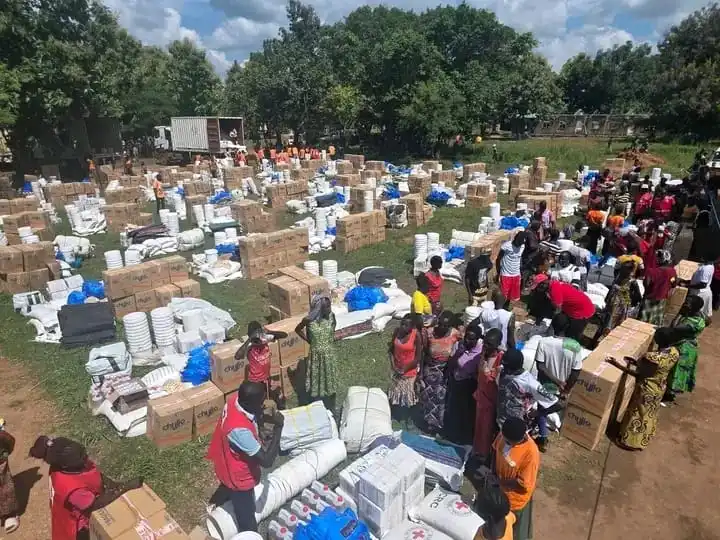
Fragile Peace Threatens Elections/PHOTO CREDITS: USAID Africa Bureau
(JUBA) – South Sudan faces serious challenges ahead of its planned elections in December 2026 as violence escalates and governance institutions remain weak. Despite the 2018 Revitalized Agreement on the Resolution of the Conflict in South Sudan, renewed clashes in Jonglei and Unity States have highlighted the fragility of the peace process. Intermittent fighting, unresolved political disputes, and stalled reforms threaten both the credibility and feasibility of the upcoming polls.
Persistent ceasefire violations in the Greater Upper Nile region continue to endanger civilians and undermine public confidence in national leadership. Key provisions of the R-ARCSS, including security sector reform and political transition measures, have been implemented inconsistently.
State institutions, notably the National Elections Commission, remain underdeveloped, and constitutional reforms have stalled. These challenges, combined with displacement, food insecurity, and localized violence, restrict citizens’ ability to participate meaningfully in political life.
The upcoming elections face multiple risks. Insecurity is the most immediate barrier, making voter registration, campaigning, and polling unsafe in conflict affected areas. Without minimum security guarantees, elections could expose civilians to violence and intimidation rather than empower them.
Institutional readiness is also inadequate, with incomplete constitutional reforms, a lack of an inclusive voter registry, and under-resourced electoral management bodies. Holding elections under these conditions could undermine the spirit and letter of the R-ARCSS and fall short of IGAD and African Union democratic standards.
Experts from the Institute of Social Policy and Research (ISPR) recommend a multi-layered strategy to stabilise South Sudan and enable a credible democratic transition. Key measures include:
Priority Measures for a Credible Transition
| Area | Recommended Action |
|---|---|
| Ceasefire and De-escalation | Negotiate a renewed ceasefire with IGAD, AU, and UNMISS monitoring and enforcement |
| Security Sector Reform | Integrate and professionalize armed forces; treat reform as a national emergency |
| Political and Constitutional Reform | Complete constitutional review and essential electoral legislation |
| Institutional Capacity | Fully operationalize National Elections Commission, Political Parties Council, and electoral security coordination |
| Inclusive Political Dialogue | Launch dialogue to address power-sharing, ethnic grievances, and election conditions |
| Conditions-Based Planning | Conduct elections only after security, governance, and constitutional benchmarks are met |
| Judicial Reform | Fast-track judicial reforms for fair electoral dispute resolution |
| Socio-Economic Stabilization | Expand humanitarian access and youth livelihoods to reduce conflict drivers |
| International Engagement | Maintain coordinated diplomatic pressure and consider targeted sanctions |
The report emphasises that democratic elections must be anchored in peace and institutional readiness. Security, inclusive political dialogue, and functional governance structures are essential; elections cannot substitute for these fundamentals. Without urgent action, elections risk deepening divisions and reversing gains achieved since 2018.

Boboya James Edimond, CEO of ISPR and a South Sudanese policy analyst, said his research aims to support evidence-based strategies for strengthening peace implementation. He is currently pursuing a PhD in Governance and Peace at Uganda Martyrs University.
Key Challenges and Recommendations for South Sudan Elections 2026
| Challenge | Impact | Recommendation |
|---|---|---|
| Escalating Violence | Threatens civilian safety, campaigning, and polling | Renew ceasefire with IGAD, AU, UNMISS monitoring |
| Weak Institutions | National Elections Commission and other bodies under-resourced | Build institutional capacity and operationalize electoral mechanisms |
| Stalled Political Reforms | Constitutional review incomplete; electoral laws not fully implemented | Fast-track political reforms and legislation |
| Insecurity in Conflict Regions | Limits voter registration and political participation | Prioritize security and conditions-based election planning |
| Humanitarian Pressures | Displacement and food insecurity reduce civic engagement | Expand humanitarian access and livelihoods programs |
| Lack of Credible Voter Registry | Undermines credibility and transparency of elections | Develop inclusive and verifiable voter registration |
| Weak Judicial Capacity | Electoral disputes may not be resolved fairly | Fast-track judicial reforms and transitional justice mechanisms |
| Ethnic and Political Mistrust | Hinders national cohesion and election acceptance | Launch inclusive national dialogue addressing root causes |
| International Oversight | Lack of coordinated support could weaken compliance | Ensure conditional international support and coordinated pressure |
| Calendar-Driven Election Planning | Elections may occur without meeting necessary security and governance benchmarks | Adopt conditions-based approach with benchmarked progress |
Policy Brief- Addressing Escalating Violence and Enabling a Credible Democratic Transition in South Sudan
Discover more from Access Radio Yei News
Subscribe to get the latest posts sent to your email.