





(JUBA) – Pan-African lender Ecobank Group has committed to lending $2 billion to women-owned businesses across Sub-Saharan Africa by 2030. The plan includes South Sudan, where Ecobank operates as one of its 34 markets on the continent.
According to Ecobank Group, the commitment is part of a combined $2.6 billion targeted lending programme announced at the bank’s 40th anniversary media conference in Lomé, Togo. The programme also includes $600 million for agricultural value chains.
Ecobank South Sudan Limited, a subsidiary of Ecobank Transnational Incorporated, is licensed under the Banking Act and operates as a private company in Juba.
The bank aims to reach 400,000 women-owned enterprises with the programme, up from more than 110,000 businesses already supported. It says the initiative will unlock funding pathways for up to one million female micro-entrepreneurs across the continent.
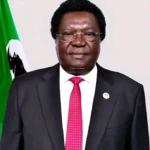
Ecobank Group Chief Executive Jeremy Awori said the lender would use digital onboarding tools to bring informal traders into the formal banking system.
“This initiative will impact at least one million micro entrepreneurs,” he said.
The expanded Ellevate programme will deploy unsecured and partially secured credit facilities backed by development finance institution guarantee partnerships. The focus sectors include agribusiness, education, and healthcare.
Women’s access to credit across Africa has been limited mainly by a lack of collateral and cultural discrimination. Most assets acceptable as loan collateral are registered under men in the family.
In South Sudan, the United Nations Development Programme has reported that the business and finance sectors remain predominantly male-dominated, creating significant barriers for women entrepreneurs. Many women operate in informal settings, running small kiosks or selling food and snacks.
The United Nations Development Programme also supports the establishment of a Coordination Forum on Gender Mainstreaming in Business and Finance in South Sudan to address systemic barriers and promote supportive policies.
The French development institution Proparco has partnered with Ecobank to lend €300 million to women through a risk-sharing facility that eliminates the need for security. The two institutions signed a Memorandum of Understanding in May 2026 to accelerate financing across agricultural value chains and support women entrepreneurs.
“Analysing banking data across our 34 markets reveals an undeniable truth: Women entrepreneurs consistently show lower default rates and higher repayment discipline than men,” Mr Awori said.
“We are not backing women entrepreneurs as an act of corporate charity. Investing in women is smart banking and sound risk management. Women-led businesses are Africa’s most undervalued, high-return asset class.”
Ecobank has also committed $600 million to fund agriculture on the continent by 2030. The programme targets the complete farm-to-fork ecosystem, funding farmers, aggregators, processors, logistics providers, traders, and exporters.
“To confront the continent’s $100 billion trade finance gap, and to capture a major share of Africa’s $1 trillion agri-food market, Ecobank commits that by 2030 we will build an outstanding loan portfolio of at least $600 million dedicated exclusively to agricultural production and agri-processing,” Mr Awori announced.
Central to both commitments is the Ecobank Single Market Trade Hub, a digital marketplace connecting over 60,000 businesses across Africa. Female agripreneurs and commercial SMEs will gain access to cross-border buyers and suppliers under the African Continental Free Trade Area.
In South Sudan, where agriculture employs the majority of the population and women play a central role in food production, the commitment could provide new sources of financing if the bank can navigate the country’s difficult operating environment.
At current parallel market rates of about SSP 7,300 per dollar, the $2 billion commitment is equivalent to roughly SSP 14.6 trillion. The $600 million agriculture portfolio is equivalent to about SSP 4.38 trillion.
Discover more from Access Radio®
Subscribe to get the latest posts sent to your email.